

Disasters whether natural, technological, or human-induced pose significant challenges to electric bus operations. This section provides a structured approach to safeguard lives, protect critical assets, and maintain operational continuity during emergencies. It outlines key strategies for rapid response and coordination across fleet, depot, charging infrastructure, and operating environments.
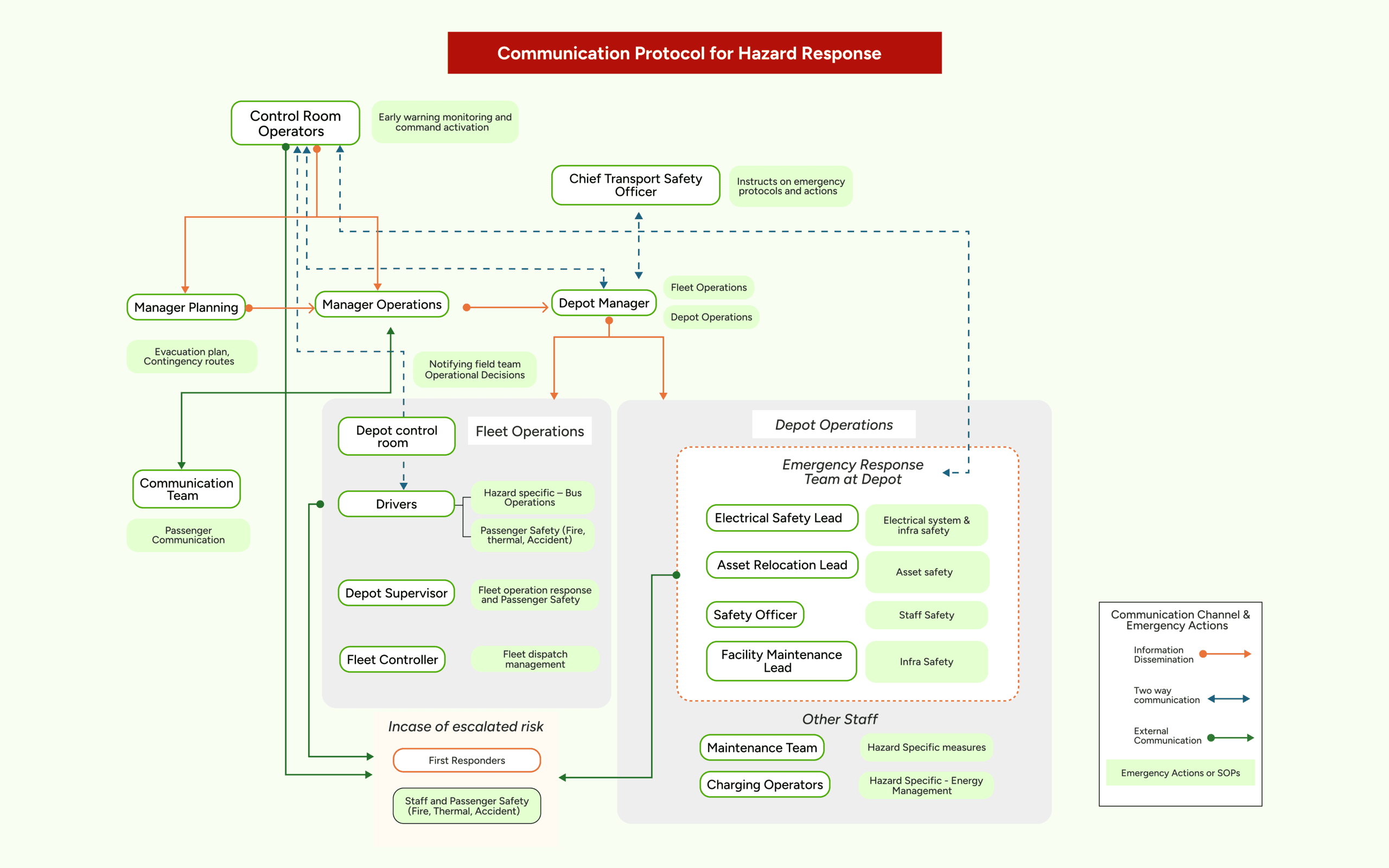
Effective communication is the backbone of disaster resilience. The protocol ensures fast, reliable, and multi-directional information flow among stakeholders:
The Central Command Control Room acts as the main hub, monitoring hazards, issuing alerts, and coordinating with managers and field staff. Where a city already has a Central Command Control Room, the same may be leveraged for these functions.
Depot managers, fleet controllers, and drivers receive instructions via ITMS, radio/VHF, and secure messaging platforms.
Passengers are informed through mobile apps, SMS alerts, and public announcements; emergency services are contacted via dedicated lines.
Field teams provide real-time updates to the Control Room, enabling dynamic decision-making and confirmation of passenger safety.
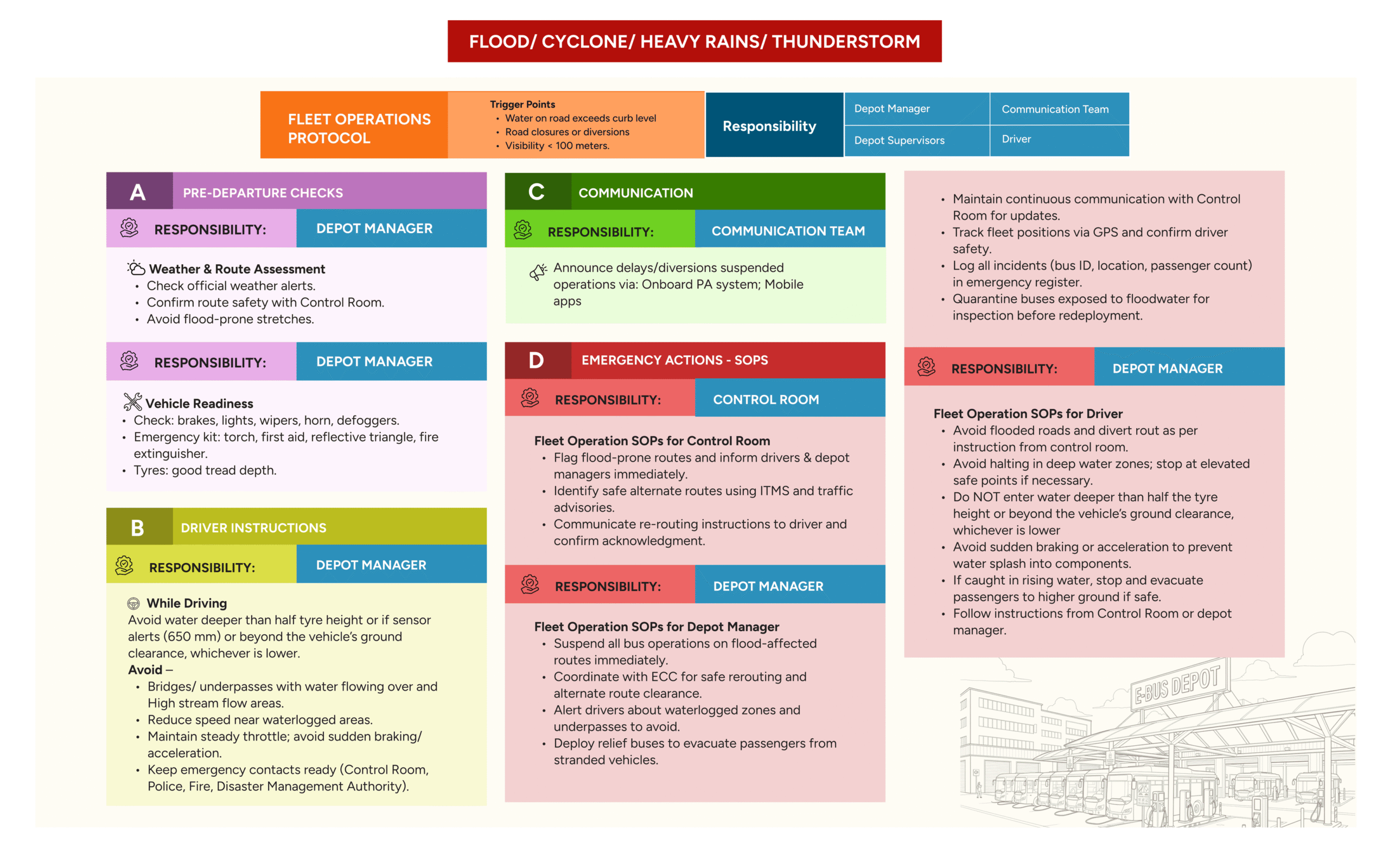
Check weather & routes, instruct drivers on safe routes and weather alerts, maintain communication.
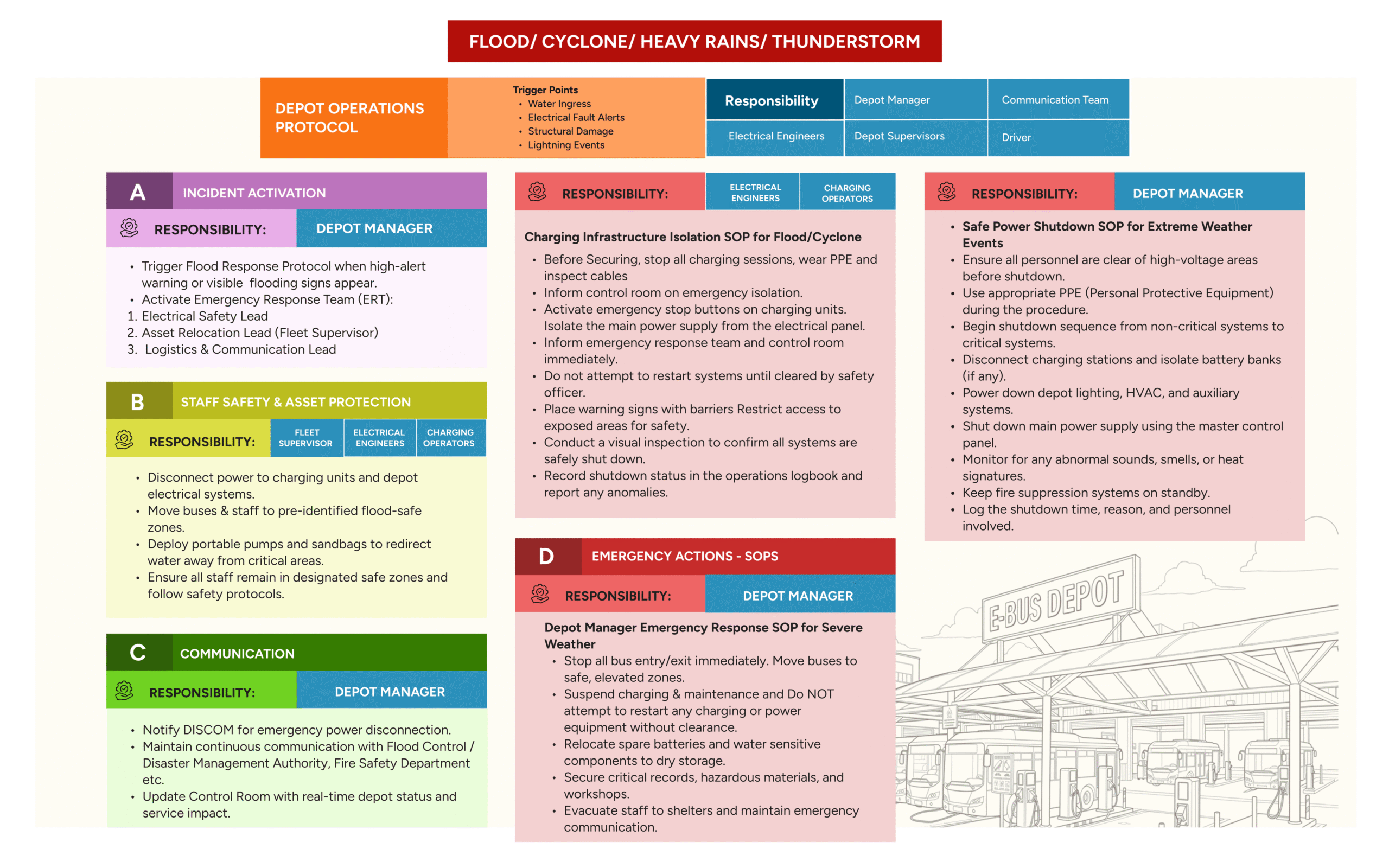
Activate high alert, protect staff/assets, coordinate with DISCOM.
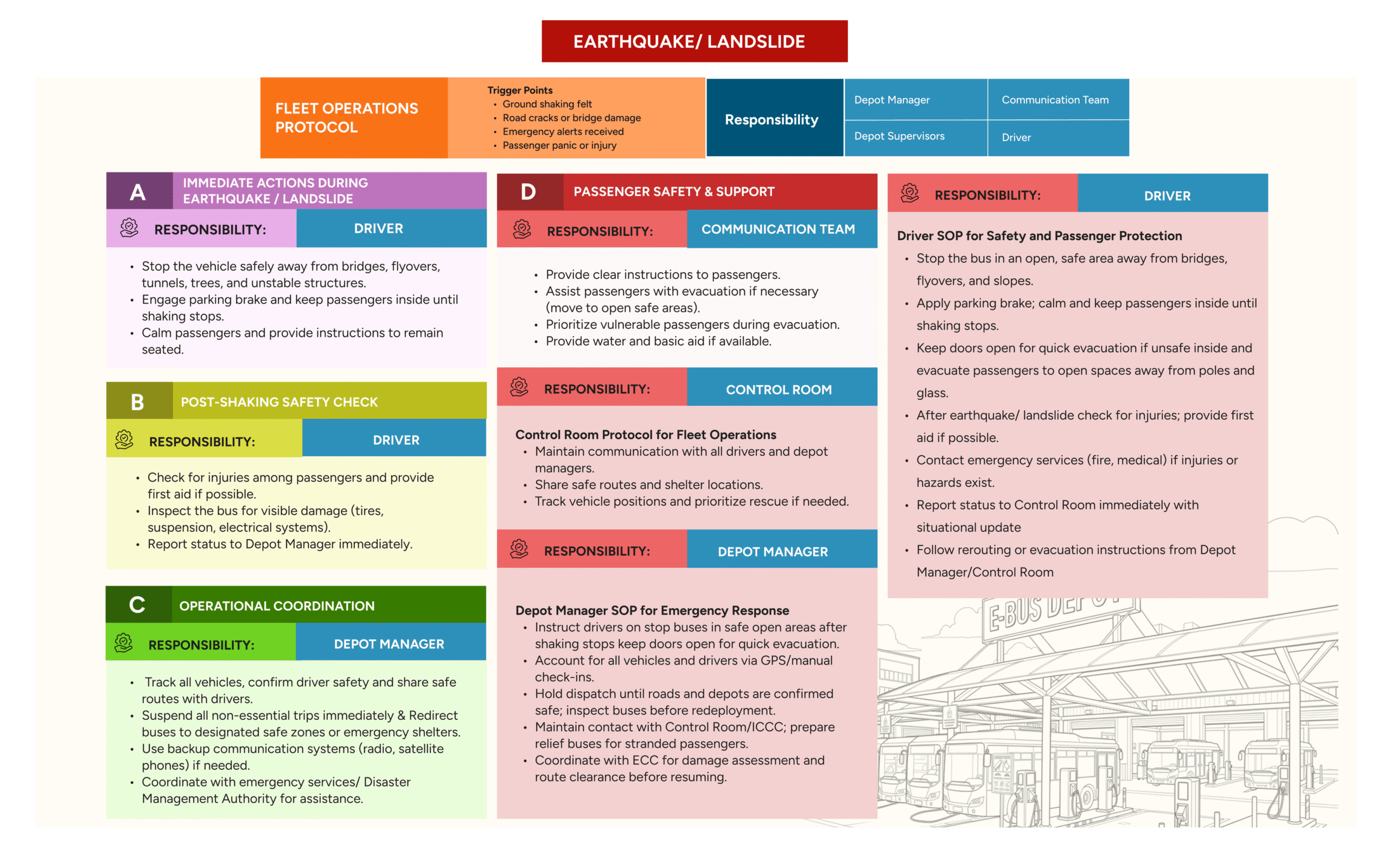
Immediate safety actions, post-shake checks, passenger protection.
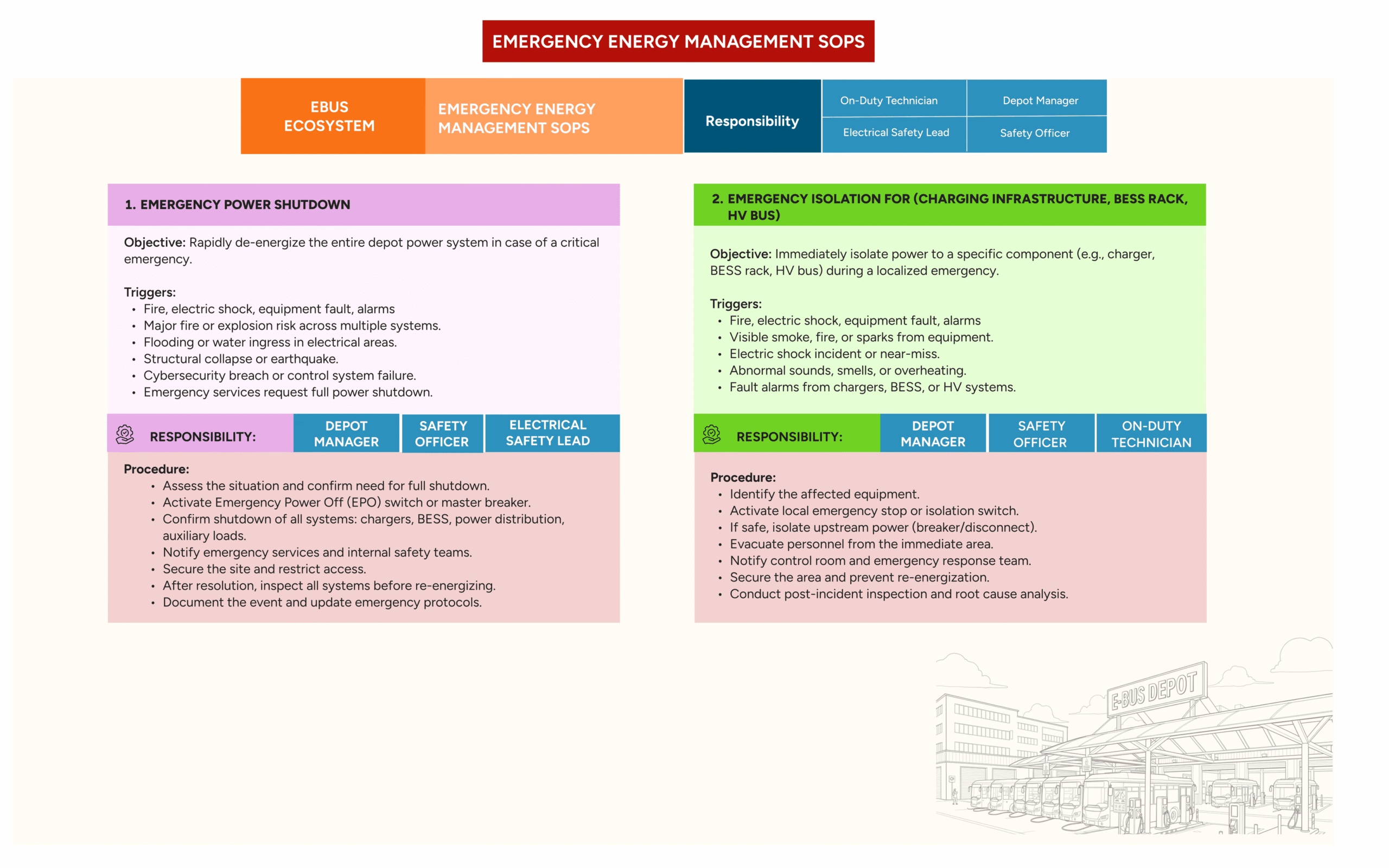
Emergency activation, electrical safety, hazard control.
Pre-dispatch checks, preventive driver actions, monitor overheating.
Cooling & ventilation, asset protection, charging safety.
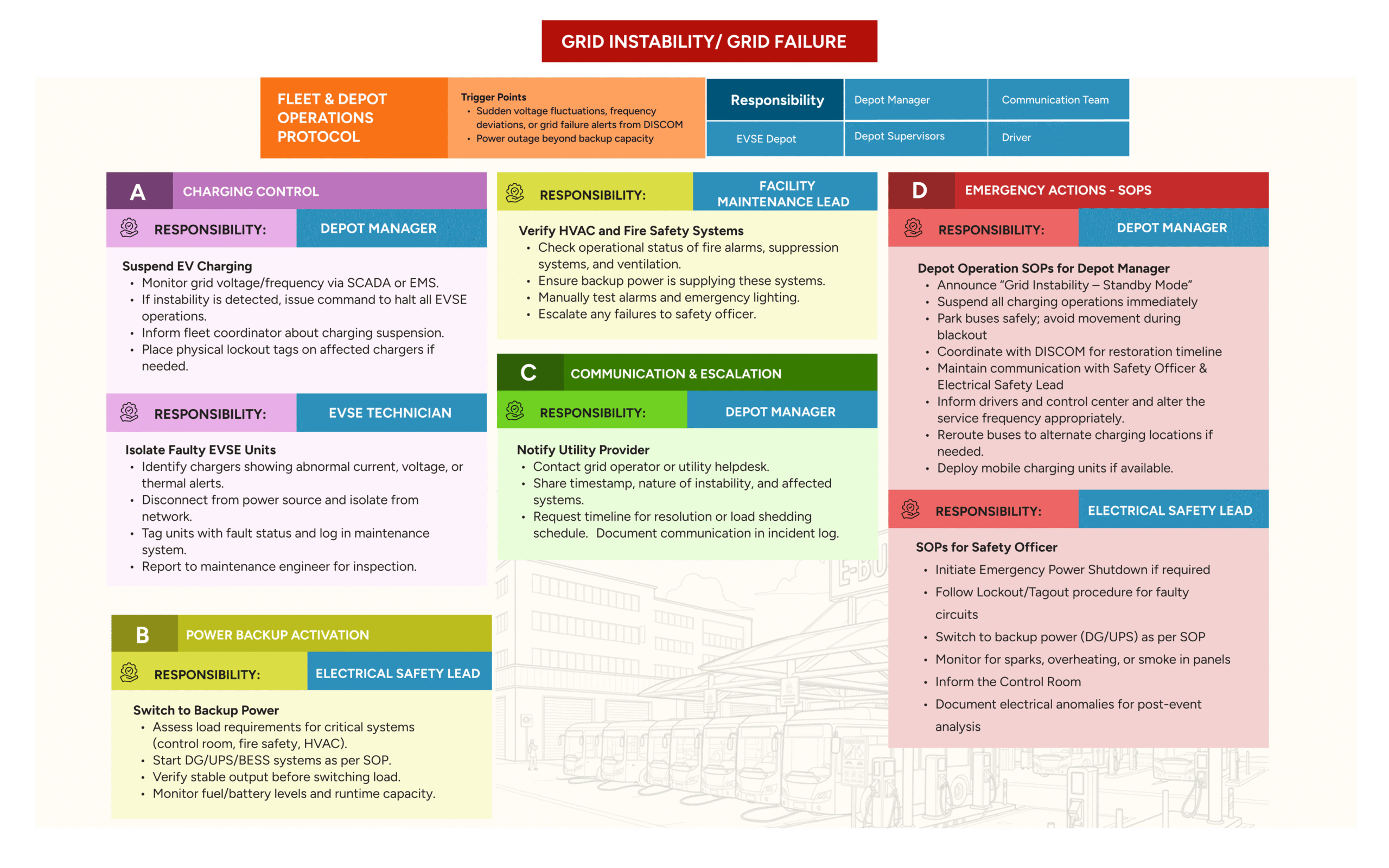
Suspend charging, switch to backup power, notify utility.
Pre-dispatch checks, preventive driver actions, monitor overheating.
Cooling & ventilation, asset protection, charging safety.
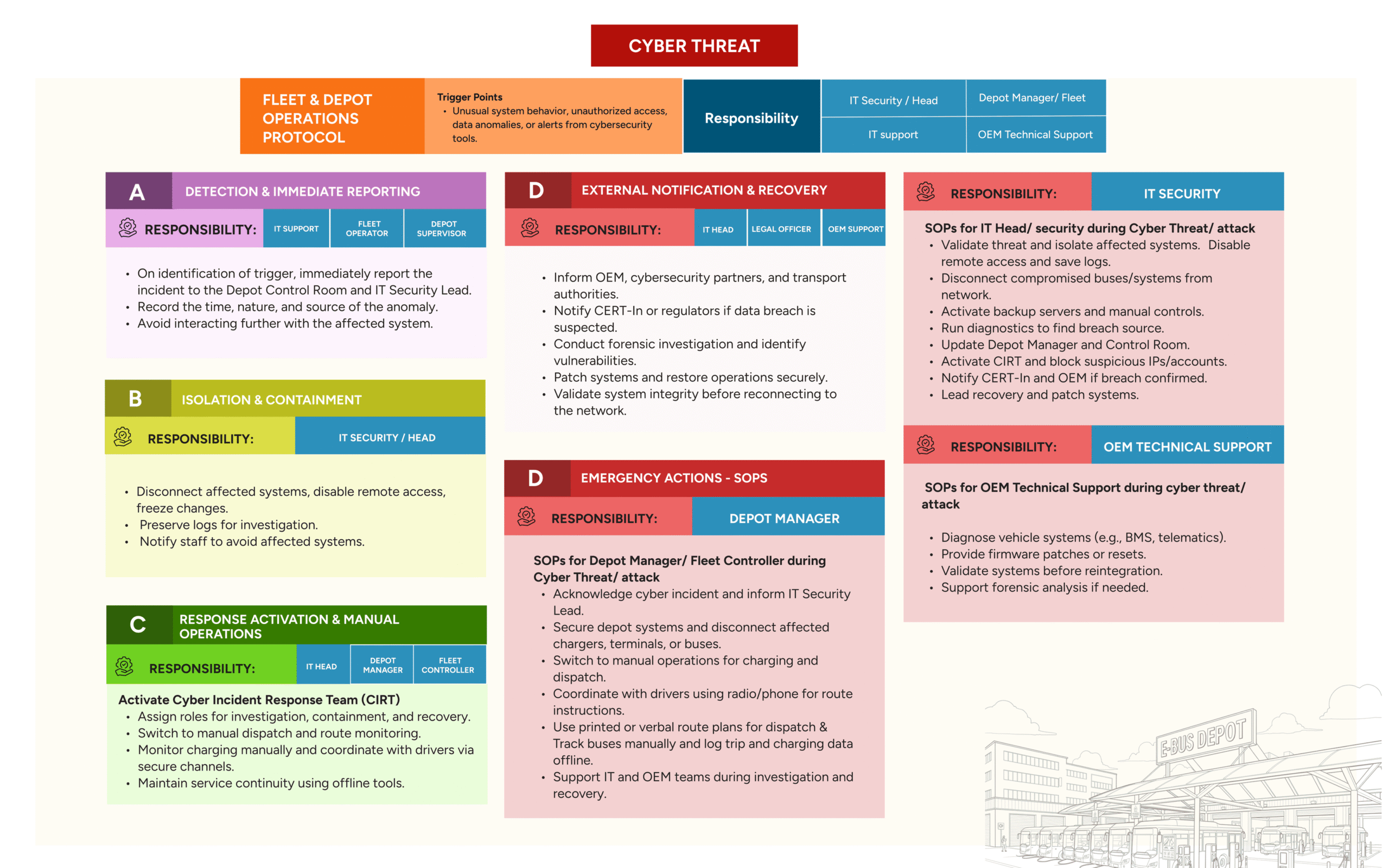
Detect & report, isolate systems, activate incident response.
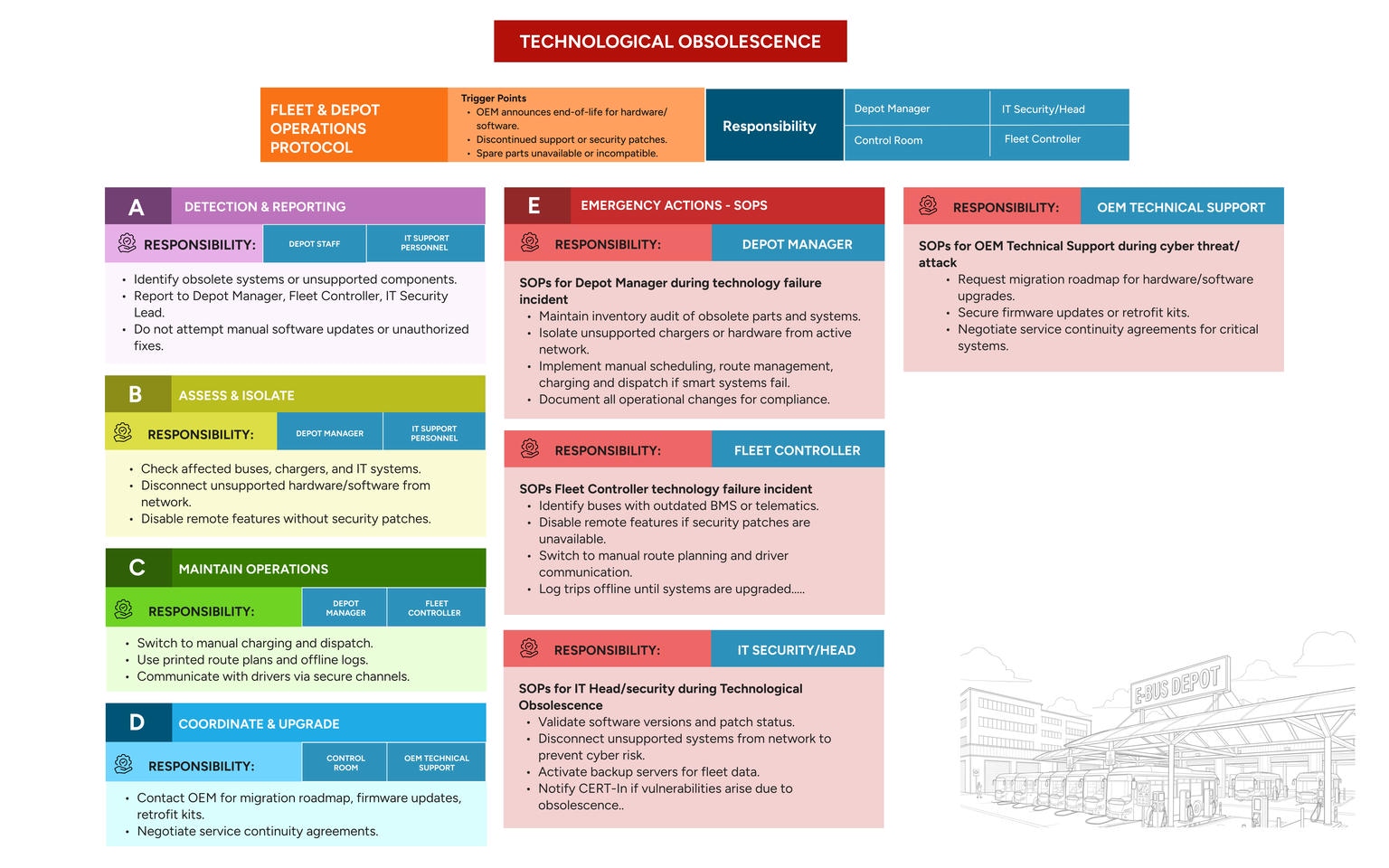
Identify outdated systems, isolate, maintain manual operations, plan upgrade.
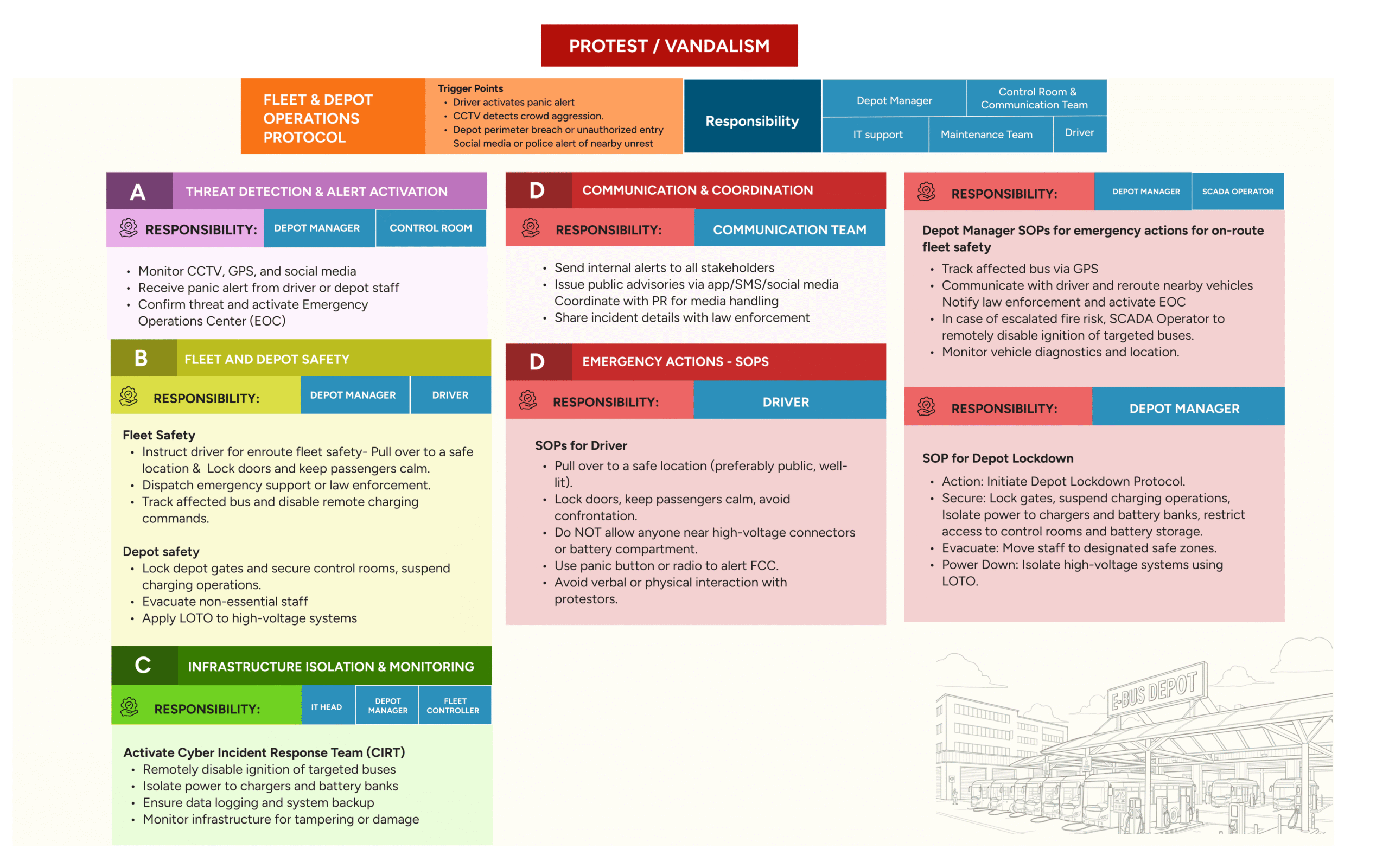
Threat detection & alert, activation, Fleet & depot safety, Infrastructure isolation, Communication
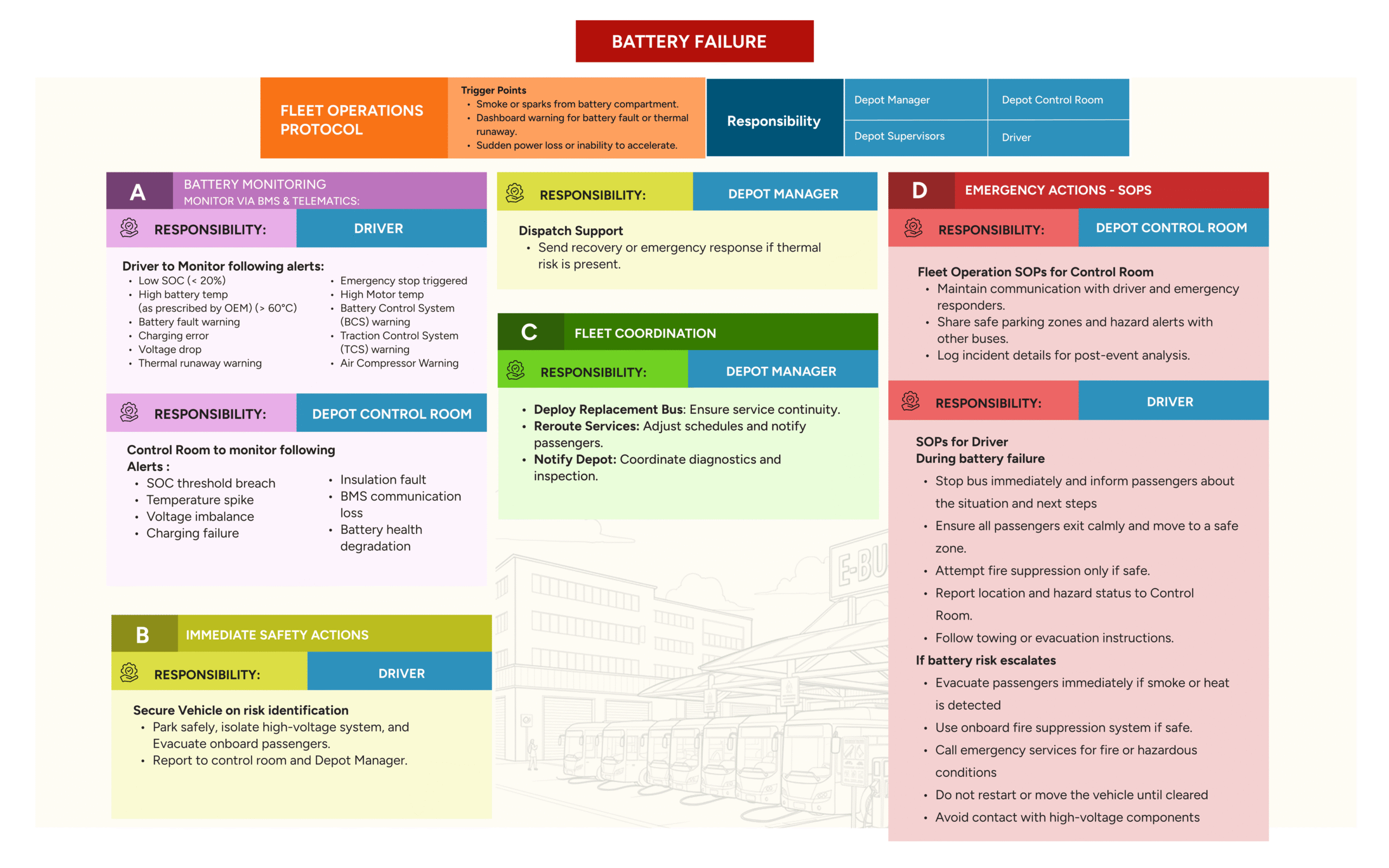
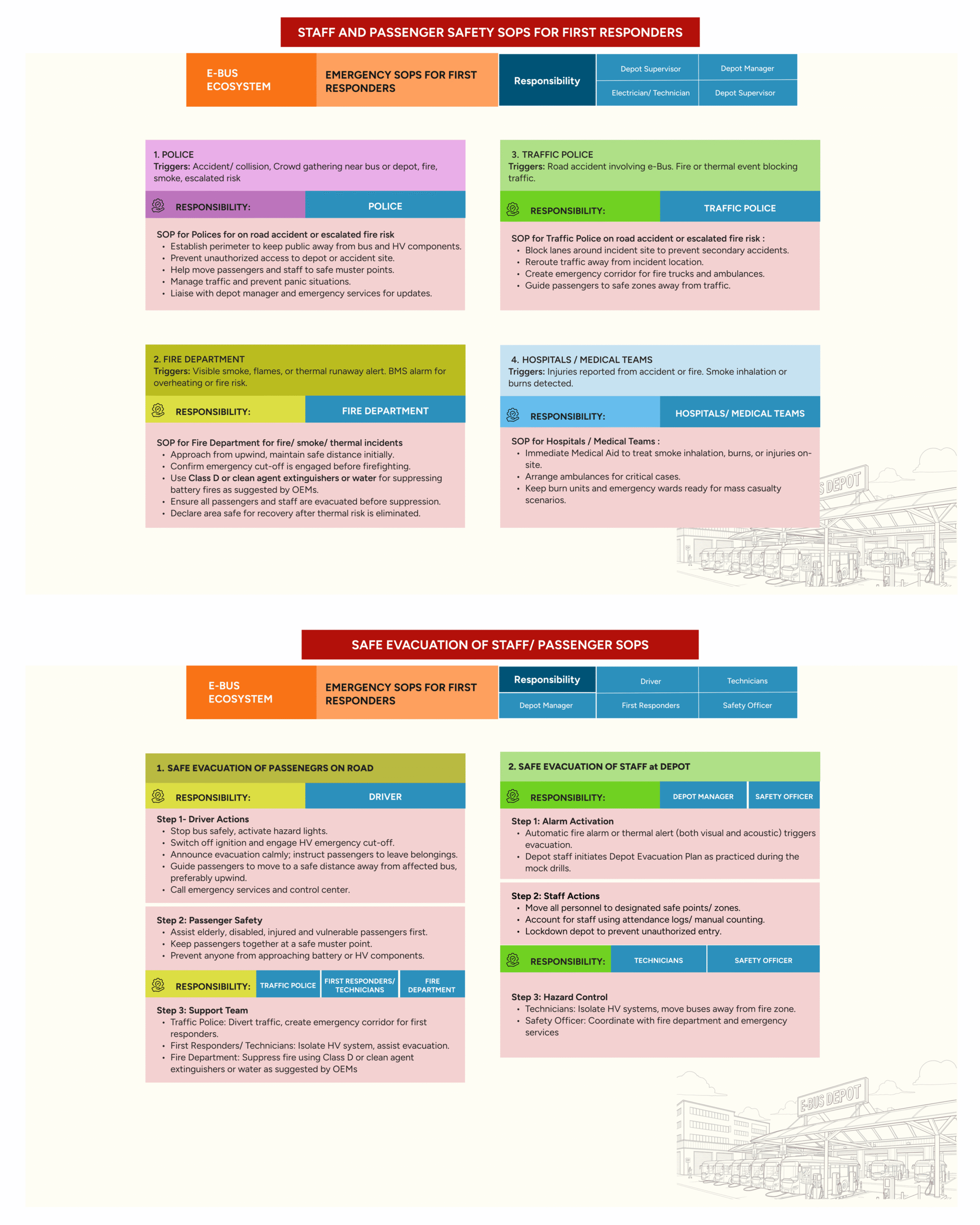
Immediate reporting & passenger safety; Electrical isolation & hazard control; Communication & escalation; Recovery & technical response.
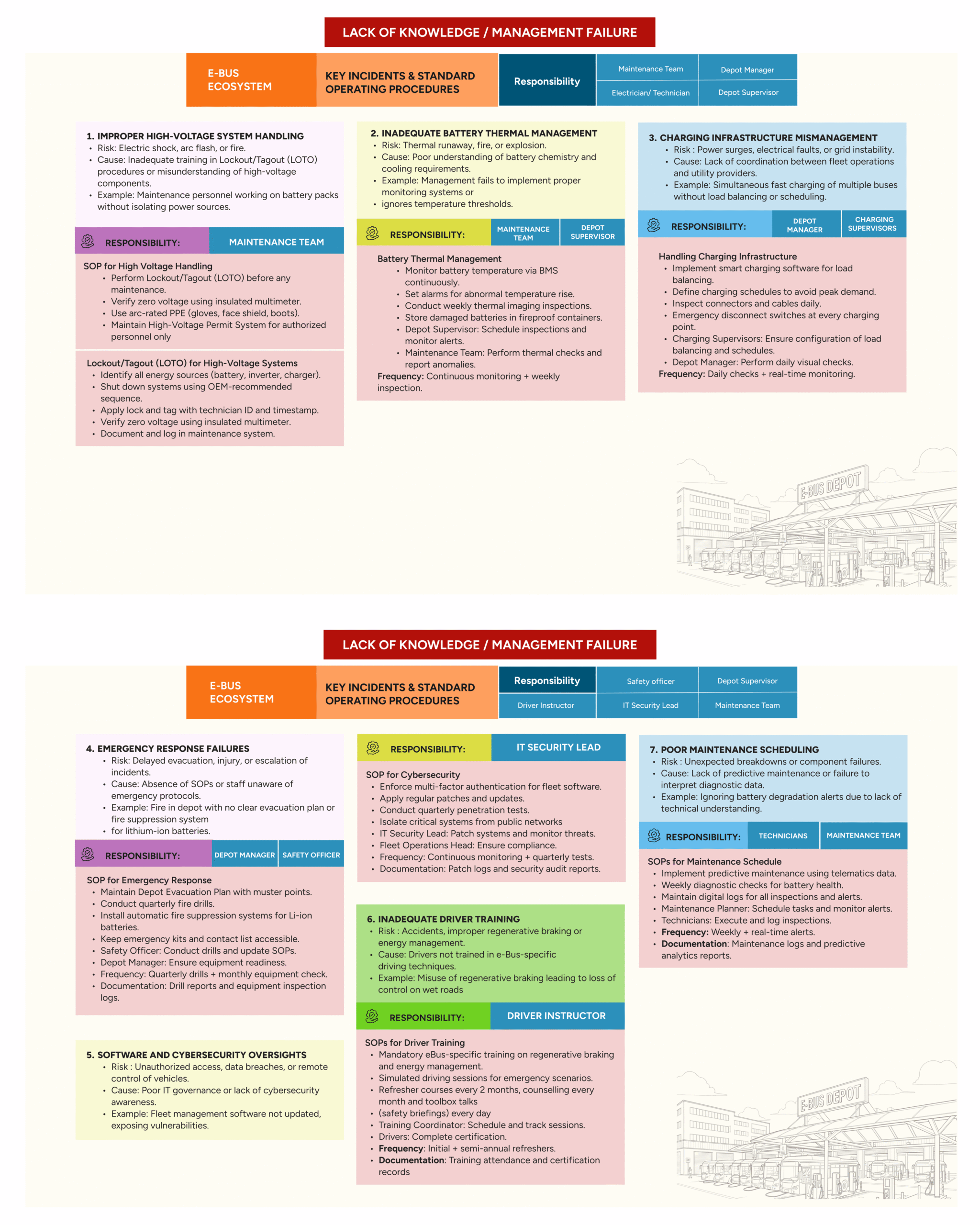
High-Voltage Handling/ LOTO, Battery Thermal Management, Charging, Emergency Response, Cybersecurity, Driver Training, Maintenance Scheduling.