E-buses are high-value assets with specific vulnerabilities, particularly during events such as floods, earthquakes, or grid instability. Given these risks, it is advisable to integrate financial and risk resilience considerations into planning and operations. Compared to conventional buses, e-buses include components like battery packs, electric drivetrains, and charging infrastructure, which may be more sensitive to environmental conditions. Therefore, systematic financial planning from the e-bus project planning stage is crucial. This section highlights the tools that can make the adequate funds available for rapid and seamless post disaster recovery.

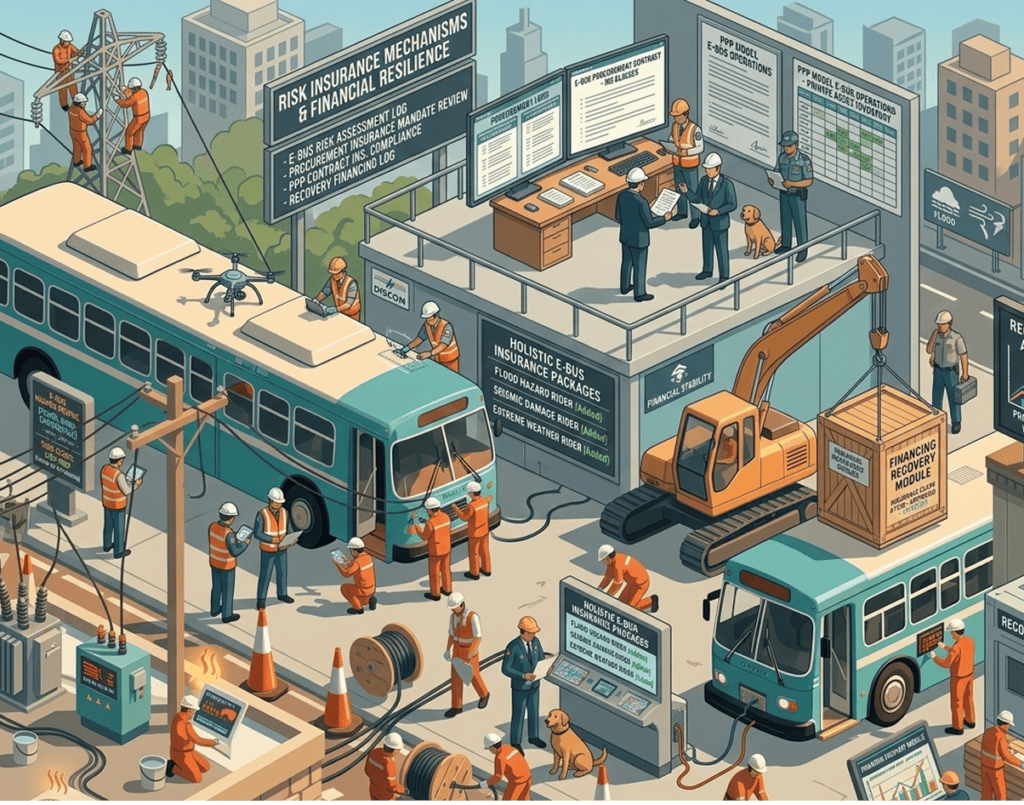
Tailored insurance solutions are emerging as important tools for financial resilience. It is suggested that e-bus risk insurance be considered during procurement and contracting processes. Considering the PPP model adopted in e-bus operations in India, Insurance packages play a vital role in financing recovery of privately owned assets. Following hazard specific insurances may be added to the current e-bus insurance packages to make them holistic.
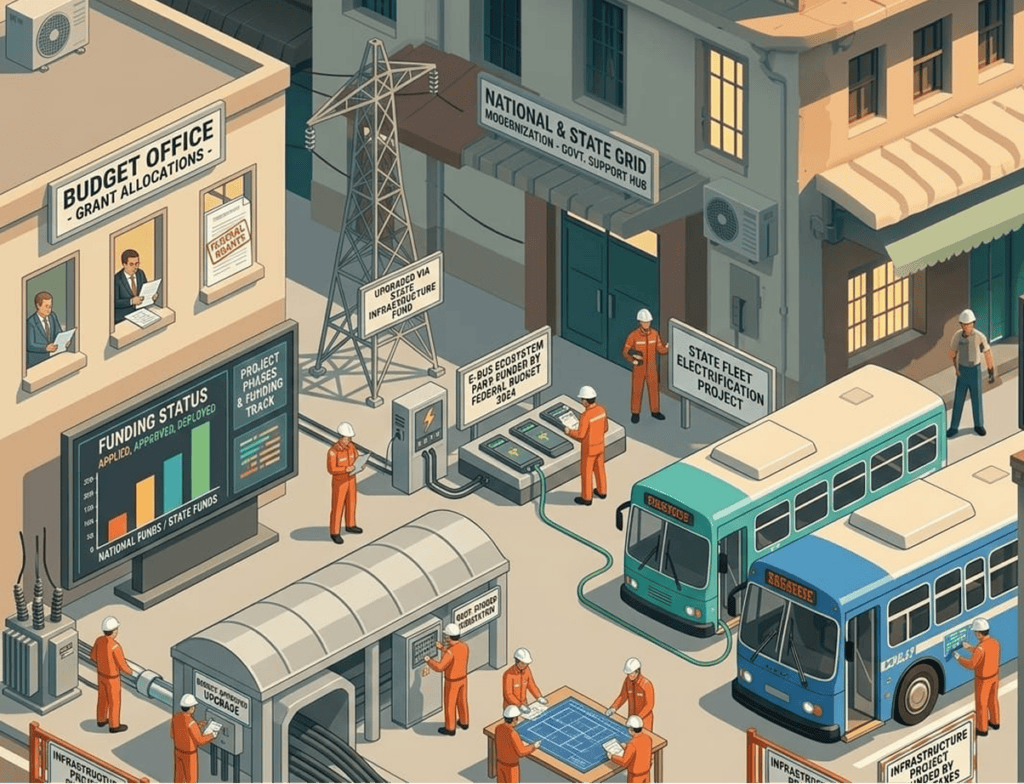
While insurance is a critical pillar, premium costs and limited availability necessitate additional support from government budgets. Government support can be availed for recovery of public assets affected due to a particular hazard. National or State government could extend support in via various mechanisms outlined below.