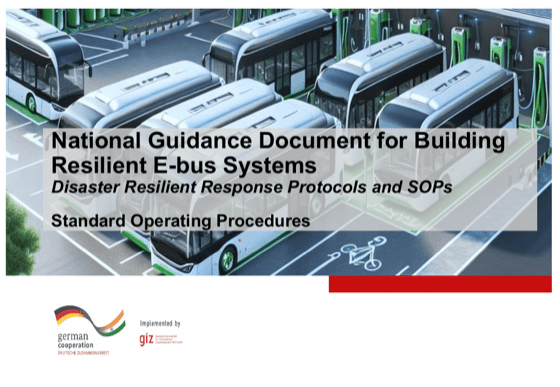



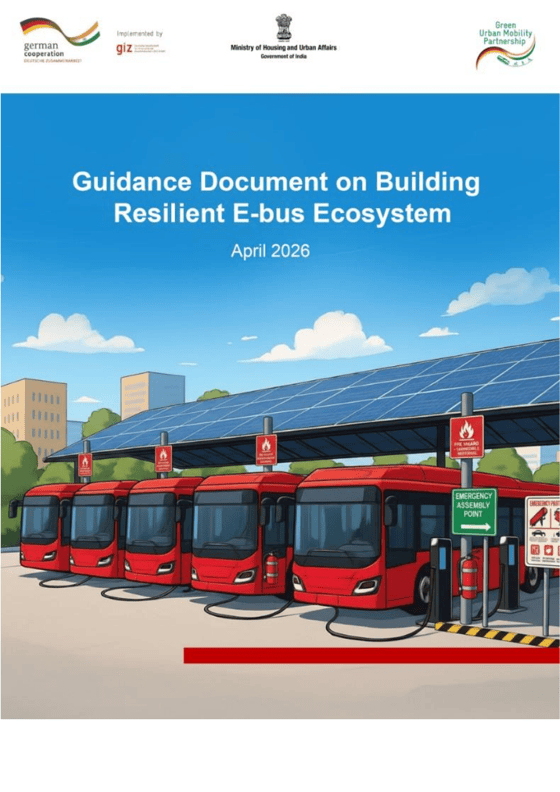
A comprehensive national blueprint outlining how cities can plan, design, operate, and manage e bus systems that remain safe and functional during natural, technological, and human induced hazards. It provides actionable strategies, SOPs, and resilience measures for fleets, depots, charging systems, and operations.
A structured, data-driven tool to evaluate hazard likelihood, exposure, and vulnerability across e bus systems. It enables cities quantify risks, identify system gaps, and prioritize interventions for safer and more resilient depot and fleet operations.
A comprehensive national blueprint outlining how cities can plan, design, operate, and manage e bus systems that remain safe and functional during natural, technological, and human induced hazards. It provides actionable strategies, SOPs, and resilience measures for fleets, depots, charging systems, and operations.
A structured, data-driven tool to evaluate hazard likelihood, exposure, and vulnerability across e bus systems. It enables cities quantify risks, identify system gaps, and prioritize interventions for safer and more resilient depot and fleet operations.
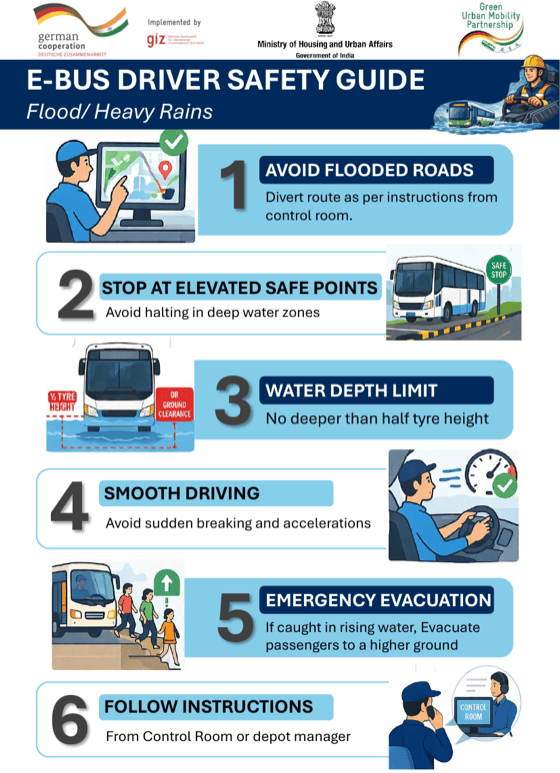
A hazard-specific emergency response guide detailing clear protocols for managing floods, heatwaves, earthquakes, grid failures, battery incidents, cyber threats, and human induced events. Defines on-ground actions for drivers, depot teams, control rooms, and emergency responders to ensure safety and continuity.
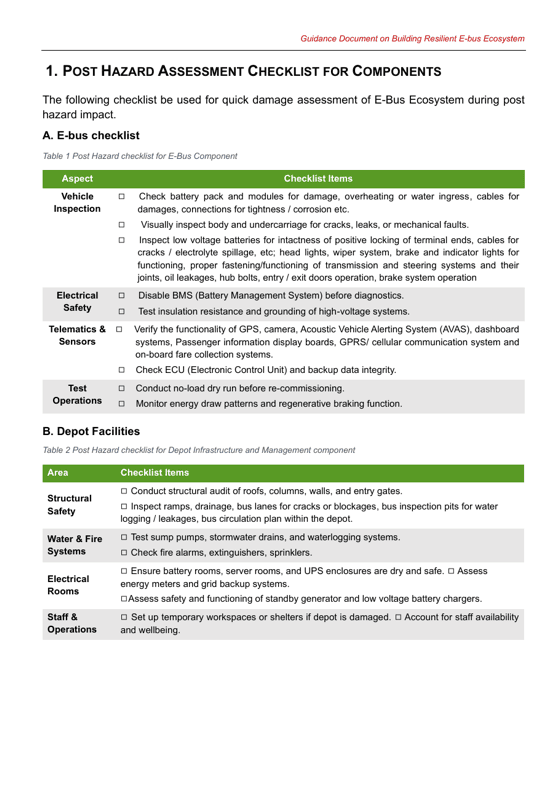
A rapid-assessment checklist that helps technical teams evaluate the condition of e bus ecosystem components after any disaster. It provides clear, hazard wise checklists for various hazards to ensure safe recovery of operations and timely repair of infrastructure.