


E-buses are central to India’s decarbonisation goals, offering cleaner, quieter, and more energy-efficient urban transport. However, their reliance on high-capacity lithium-ion batteries, high-voltage systems, and interconnected charging infrastructure introduces new safety and operational risks. Fire hazards, thermal runaway, system failures, and climate-induced stresses such as heatwaves, floods, and extreme weather can disrupt services and endanger lives. Unlike conventional buses, e-bus systems are highly interdependent, where failures can quickly cascade across vehicles, depots, and operations. Building disaster-resilient e-bus ecosystems is therefore essential to ensure safety, reliability, and continuity of public transport in a changing climate.
The E-bus ecosystem typically compromises four interconnected components the fleet, depots, charging infrastructure and the operating environment. While each component serves a distinct function, their performance is deeply interdependent. Ensuring resilience across all four components is critical, as disruption or failure in any one element can trigger cascading impacts on the others, affecting service continuity, operational reliability, and overall safety of the public transport system.
The fleet forms the primary interface between the system and passengers, making its reliability non – negotiable. Vehicle body design, battery placement to onboard safety system collectively determine how well e-buses can withstand hazards, ensuring resilience.
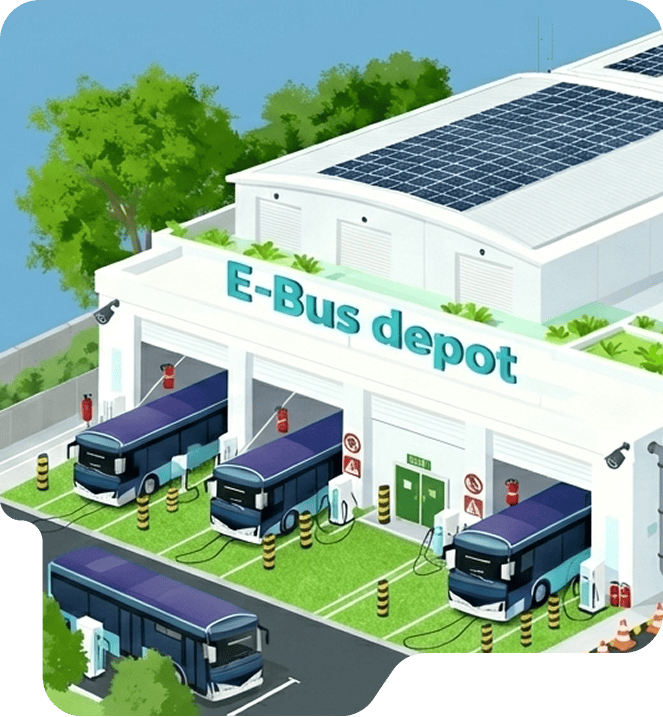
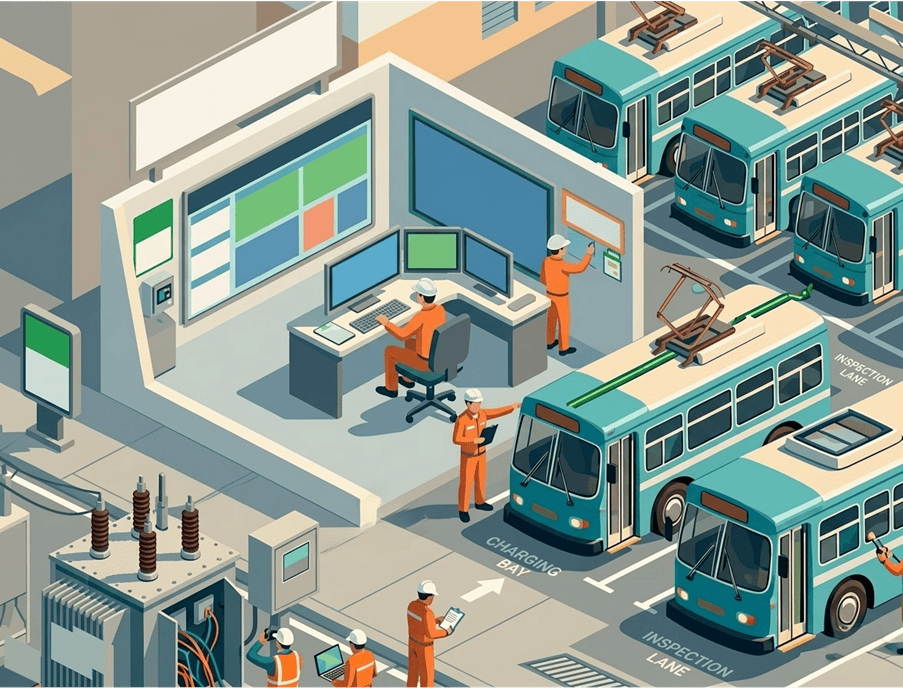
Depots serve as the operational backbone of the E-Bus system, housing vehicles and charging infrastructure to maintenance facilities and staff, which makes them highly vulnerable to hazards. Therefore, resilient depot design and efficient layouts are essential to safeguard assets and personnel, and to enable rapid recovery after disruptions.
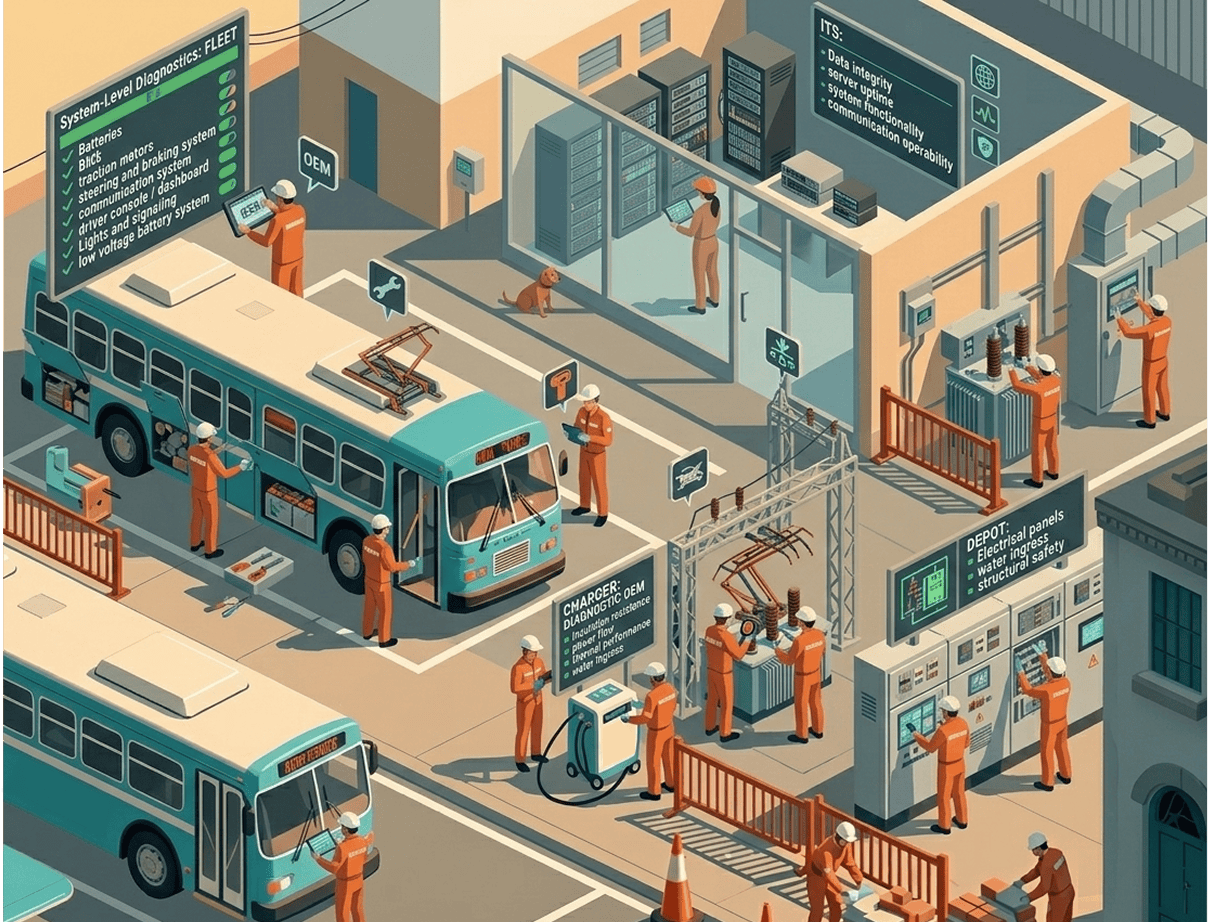
Provides the energy lifeline to the fleet, encompassing chargers, substation, transformer, cabling and energy management. Thus, building resilience in this component require redundancy, robust safety mechanism to reliable grid connectivity and safe power supply.
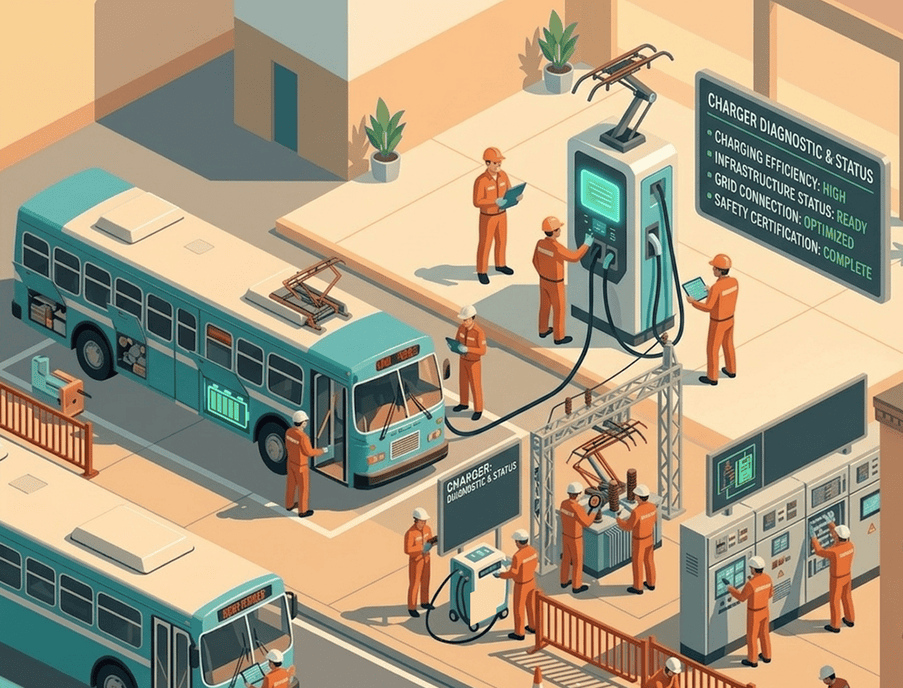
Encompasses the broader urban system in which e-buses operates, including corridors, stations, en-route passengers, crew and supporting IT systems. Strengthening resilience at this level ensures passenger safety and service reliability, even during extreme events or system disruptions.
E-bus systems are exposed to a wide range of risks that can disrupt operations, compromise safety, and result in significant financial losses. This guide identifies 10 key hazards affecting the e-bus ecosystem in the Indian context. These hazards are categorised into three board groups: Natural Hazards, driven by environmental and climatic events; Technological Hazards, arising from failures in electrical power supply systems, batteries, digital systems, and related technologies; and Human-induced Hazards, stemming from capacity gaps, human error, and management failures that lead to accidental or operational disruptions. Each hazard is assessed for its potential impact across four critical components of the e-bus ecosystem as outlined in the preceding sections.
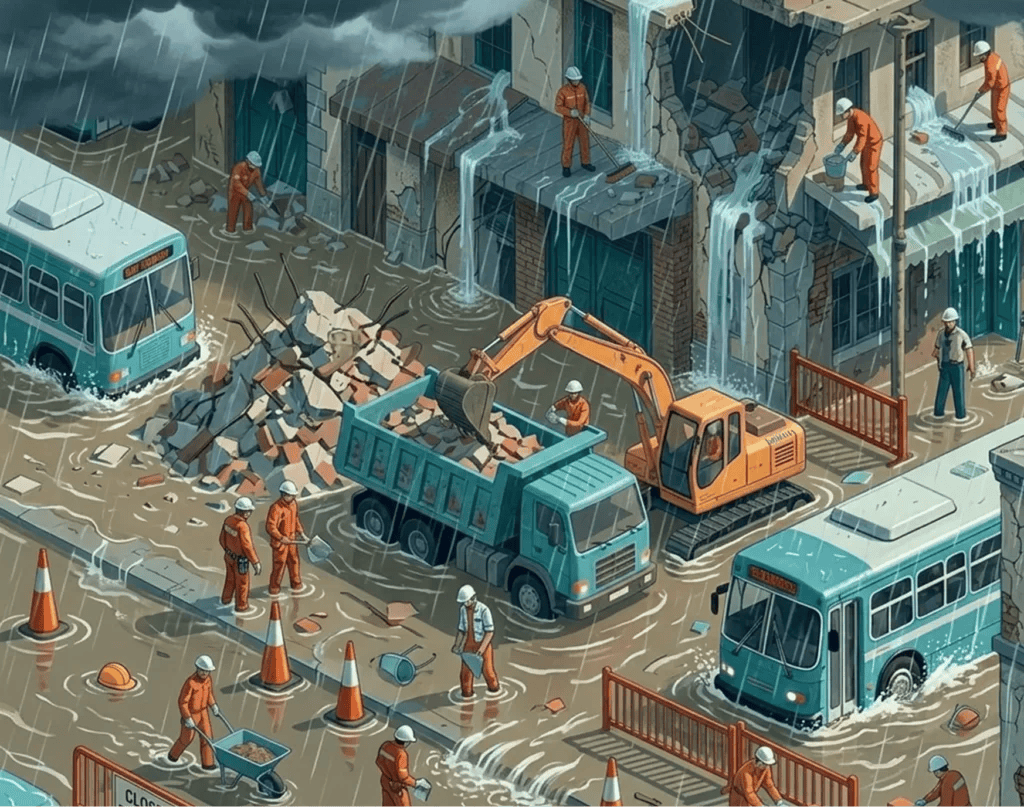
Floods/ Cyclone/ Heavy Rains/ Thunderstorm: These events can disrupt the entire e-bus ecosystem due to waterlogging at depots and on road networks, leading to unsafe operating conditions such as submerged charging infrastructure, water ingress in e-buses during operations, damage to batteries and electrical systems, power outages, vehicle breakdowns, heightened safety risks, and service delays
Heatwaves: Extreme high temperatures can disrupt the e-bus ecosystem by elevating the risk of battery overheating and thermal incidents, reducing charging efficiency, placing additional stress on onboard electrical and electronic systems, increasing cooling demand and adversely affecting driver health and overall operational performance
Earthquake/ Landslides: Structural damage to depot infrastructure and e-buses, loss of power and communications, road failures, and disruption to passenger amenities, resulting in significant safety and service risks
Grid Instability: Disrupts charging, degrading batteries, triggering electrical failures, and causing service delays, safety risks, and passenger inconvenience
Battery Failure: Triggering thermal runaway, fires, shutdowns, and serious safety hazards across the ecosystem
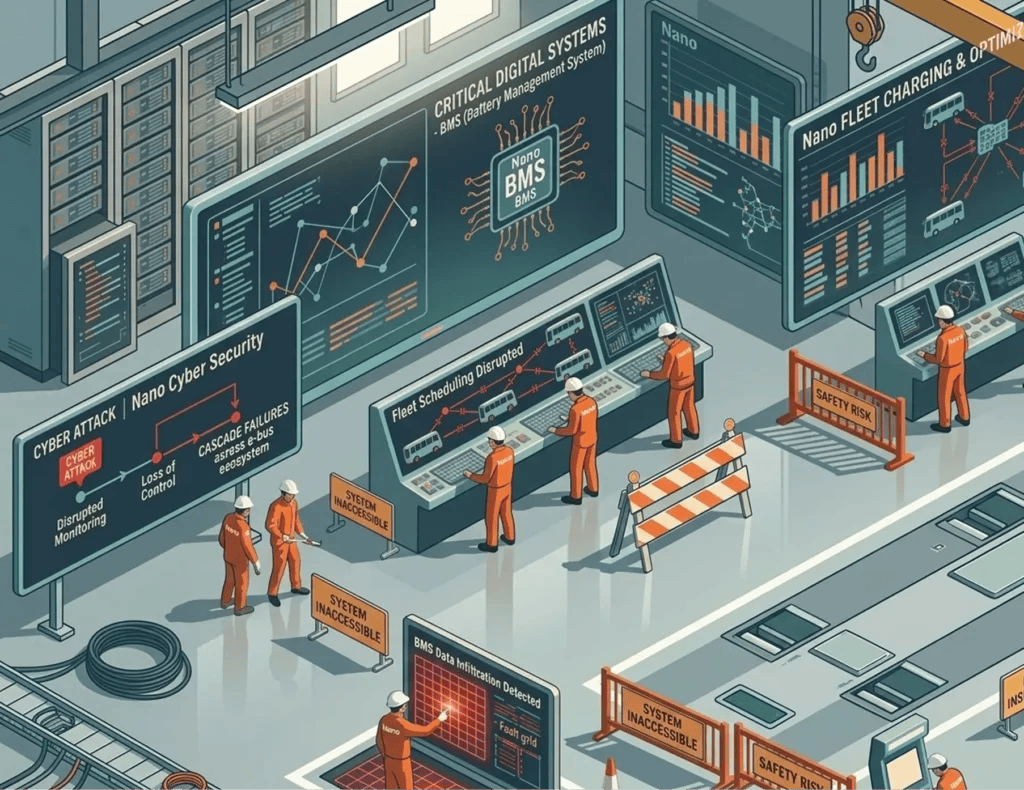
Cyber Threat: Targets critical digital and control systems such as Battery Management System (BMS), charging control software, scheduling platform and fleet management systems. Disruption of these systems can affect monitoring, control, and communication functions. Such failures can cascade across the e-bus ecosystem, leading to operational disruptions, service breakdowns, and increased safety risks
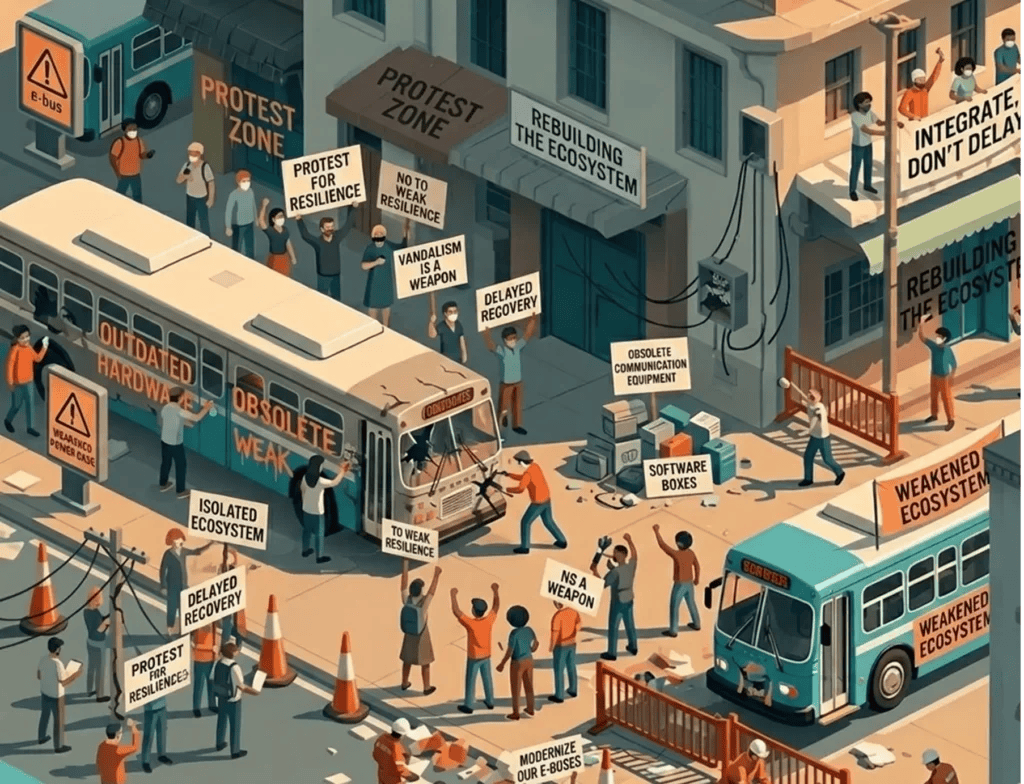
Technological Obsolescence: Obsolete hardware, software, and communication systems can weaken e-bus ecosystem resilience, delaying recovery and limiting integration with newer, more robust technologies
Protest/ Vandalism: Triggers asset damage, disrupting routes and charging schedules across the e-bus ecosystem, and endangering passengers and staff safety
Traffic & Operational Accidents/ Human Negligence: Accidents arising from operational and traffic conditions can cause multi-component failures within the e-bus ecosystem, including vehicle damage, battery hazards, thermal runaway, infrastructure impacts, and service interruptions leading to cascading system impacts
Knowledge Gaps/ Management Lapse: Operational negligence and lack of knowledge can result in collisions, operational lapses, improper charging practices, and maintenance failures, thus can lead to injuries, asset damage, battery thermal events, and service disruptions
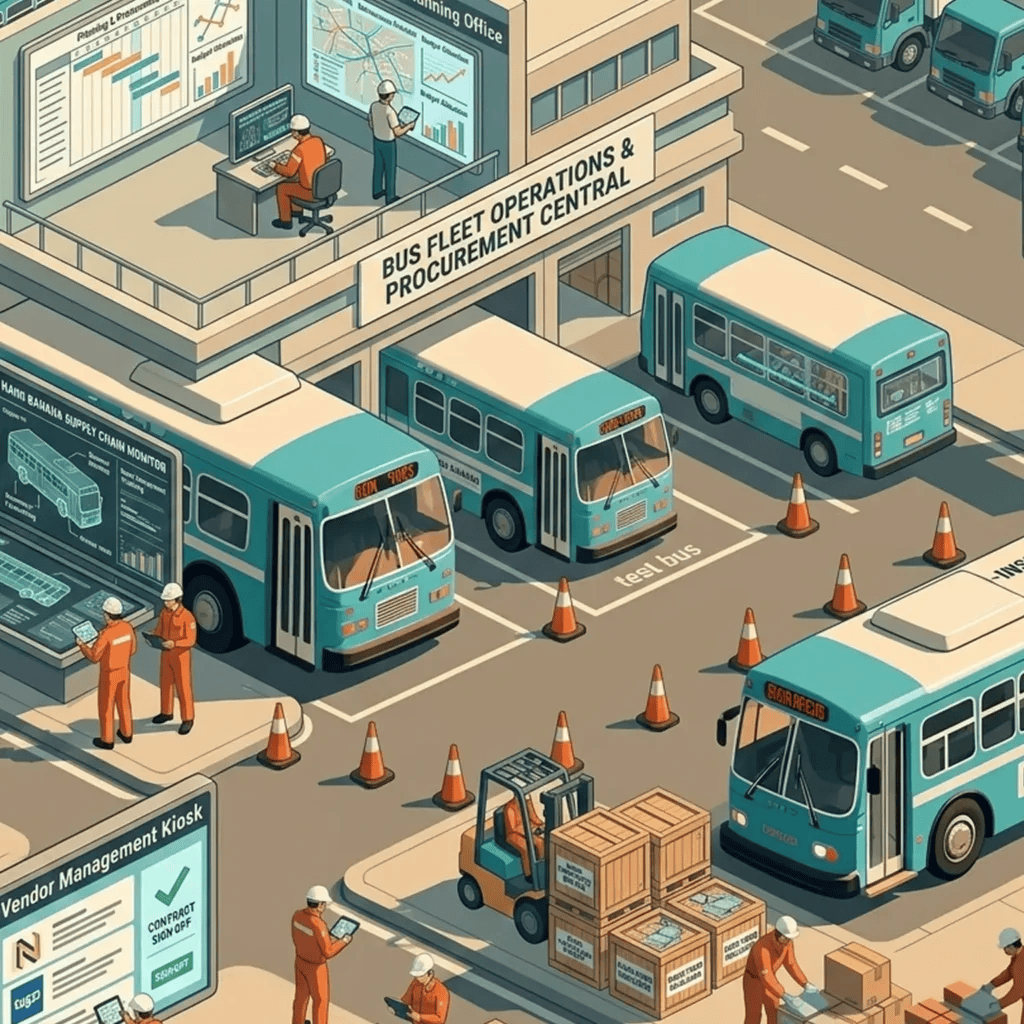
Acquire e-buses and related services, ensuring compliance, cost-effectiveness, safety, and operational alignment
Plan strategic route planning, resource estimation, infrastructure development and performance monitoring to esure efficient public mobility
The role involves operational oversight, managing and overseeing public bus services and the transition to e-buses
Plan, design, and construct depot in compliance with safety and city’s regulation, with electrical team managing power systems and electrical system
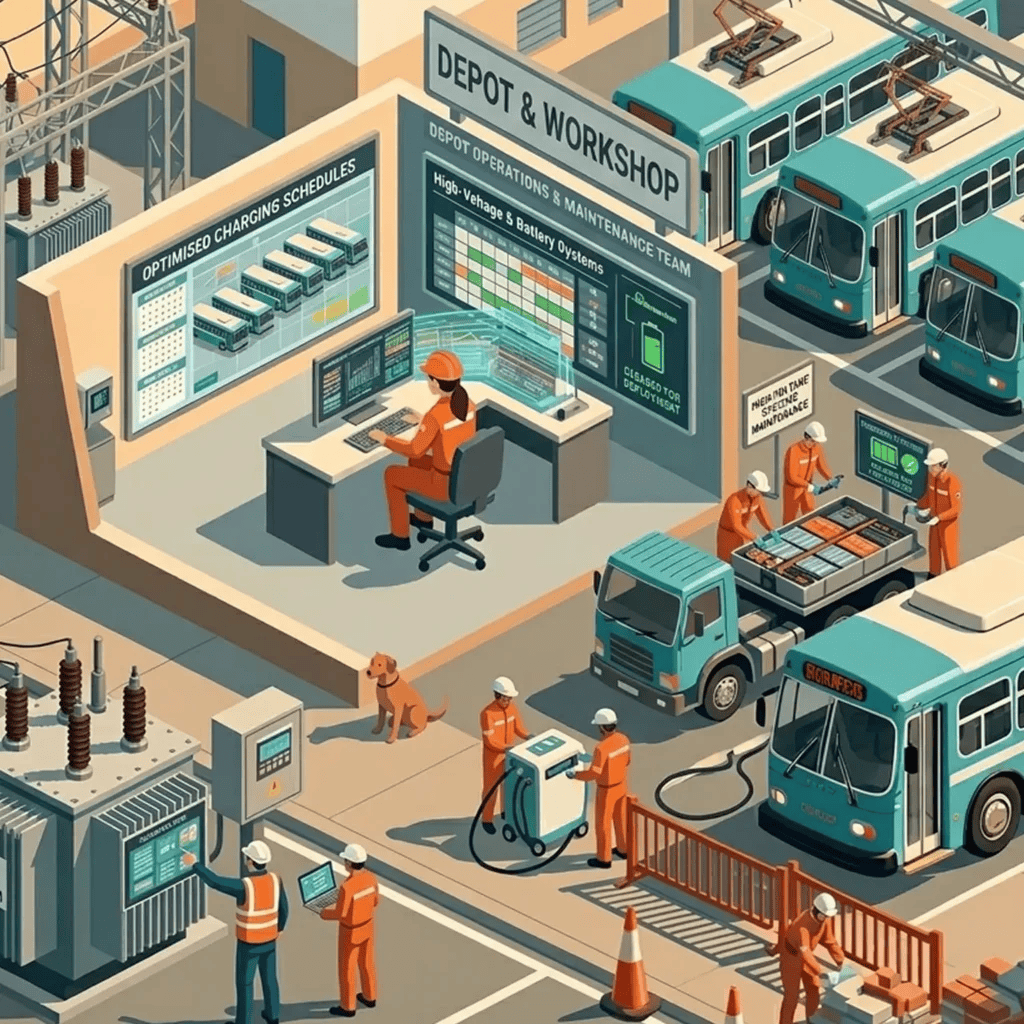
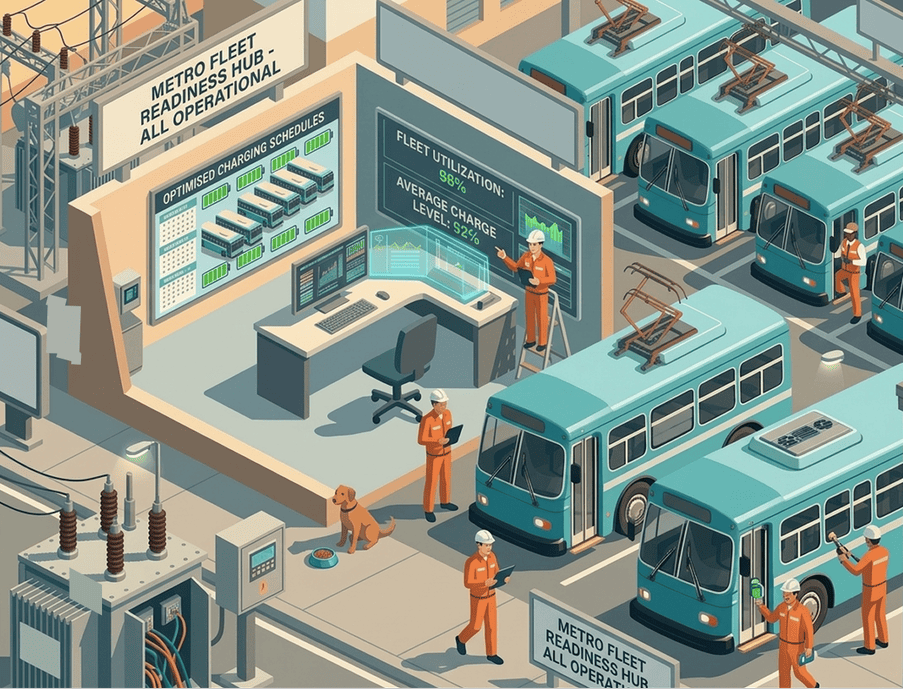
Manage depot operations, maintenance, optimises charging Schedules and high-voltage/battery systems to ensure safe, reliable fleet performance
Optimises charging schedules, monitor charger status and ensures the bus readiness. Performs preventive maintenance and safety checks on charging infrastructure
Keeping e-buses operational by carrying out high voltage system diagnostics, battery maintenance, motor/inverter checks, charger upkeeps & routine servicing and safety assurance
Ensures reliable power supply and grid stability, supporting in setup of charging infrastructure and providing necessary power clearances to the e-bus depot
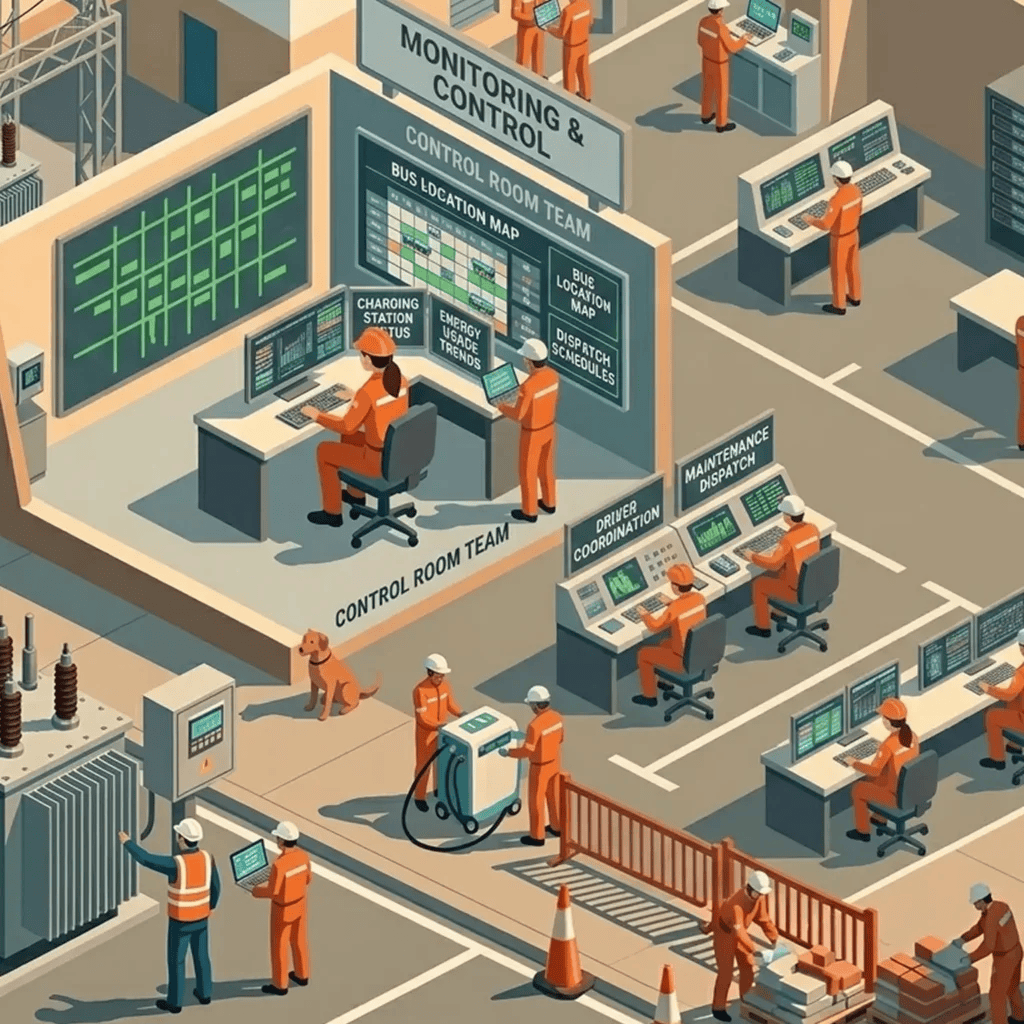
Monitoring bus location, charging and energy usages. Manages dispatch and coordinated with driver and maintenance to resolve operational issues
Provides real time monitoring, optmisises charging schedules, ensuring battery health, and analysing data for performance improvement
Oversees depot operations, energy management, fleet readiness, and driver support; uses ITS for real-time tracking, battery monitoring, and daily operations management
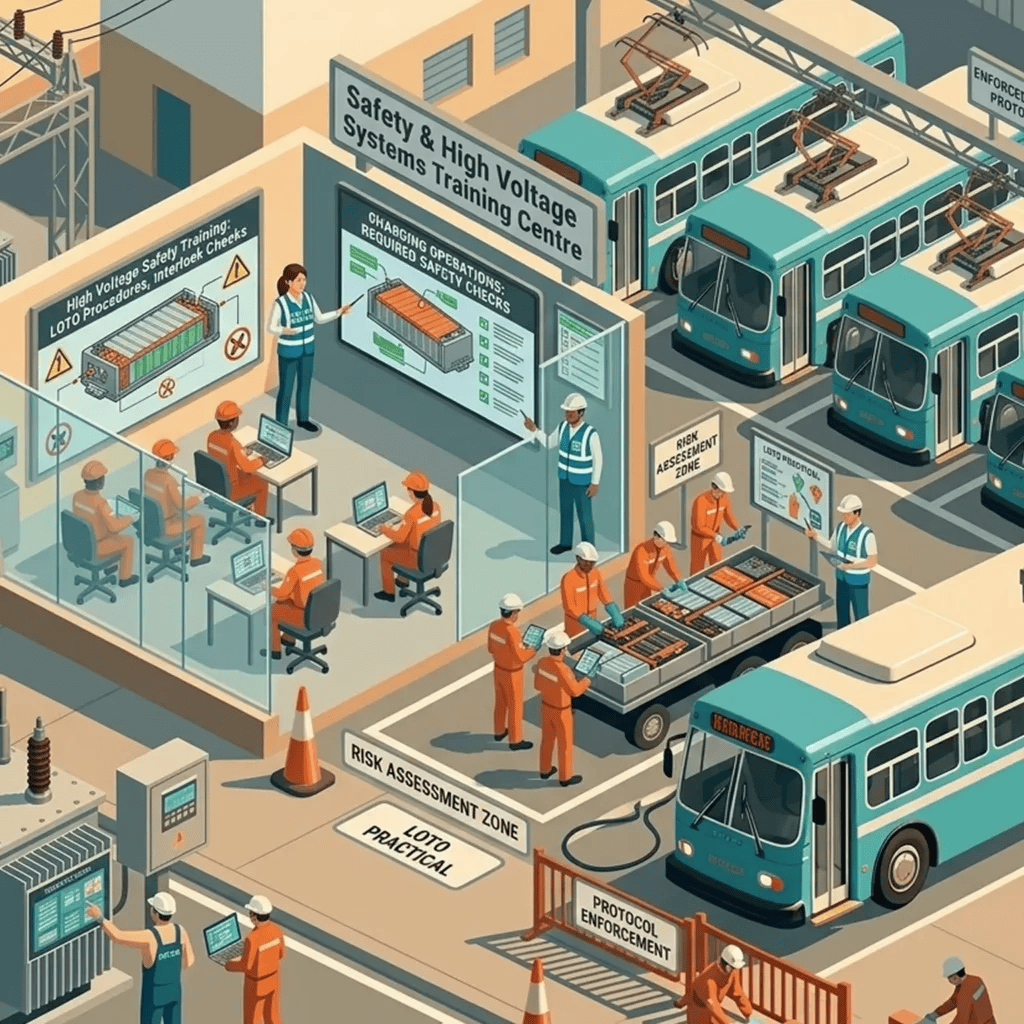
Provides specialized training, conduct risk assessment and enforces safety protocols for all high voltage systems and charging operations
Develops skills and knowledge across staff to support a smooth transitio to e-buses, covering technical operations, charging, procurement & management
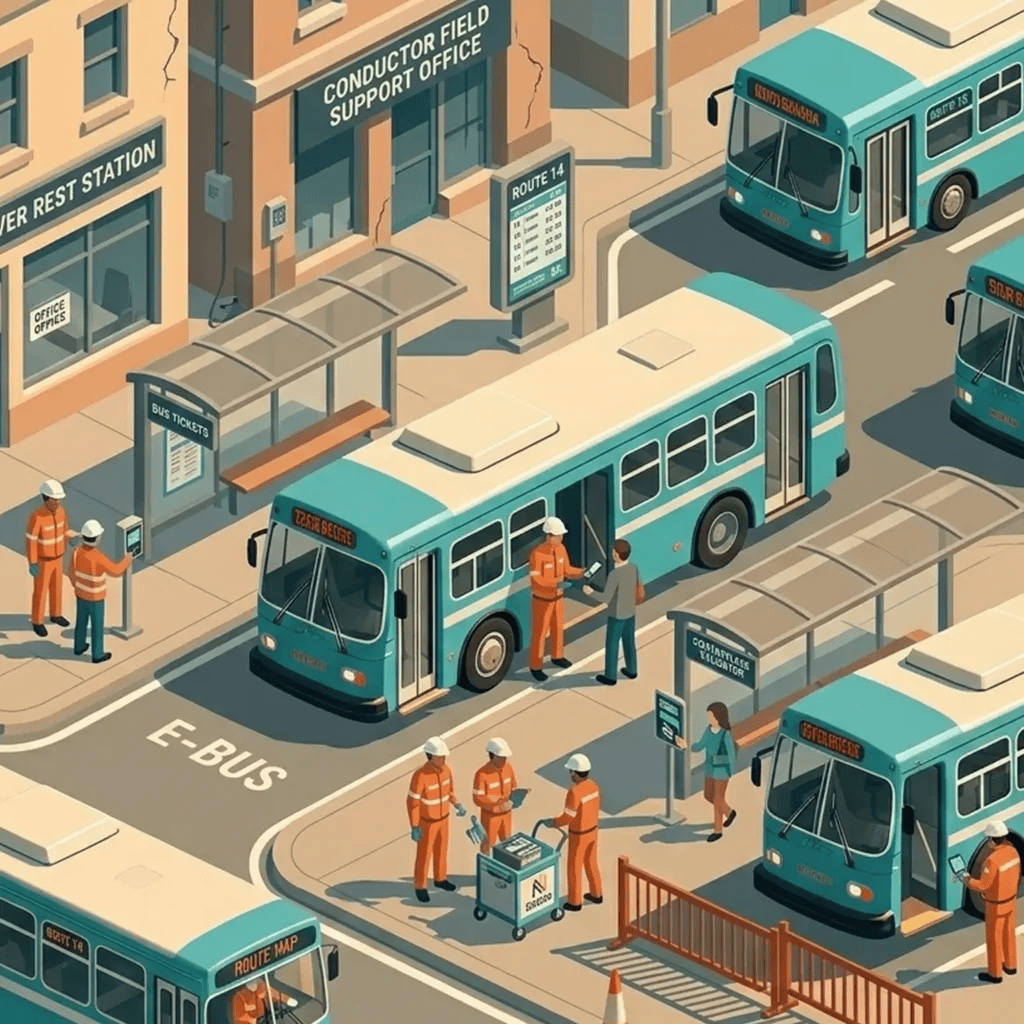
Ensures safe, efficient e-bus operations on route, managing dashboards and driving, while conductors handle ticketing and passenger services
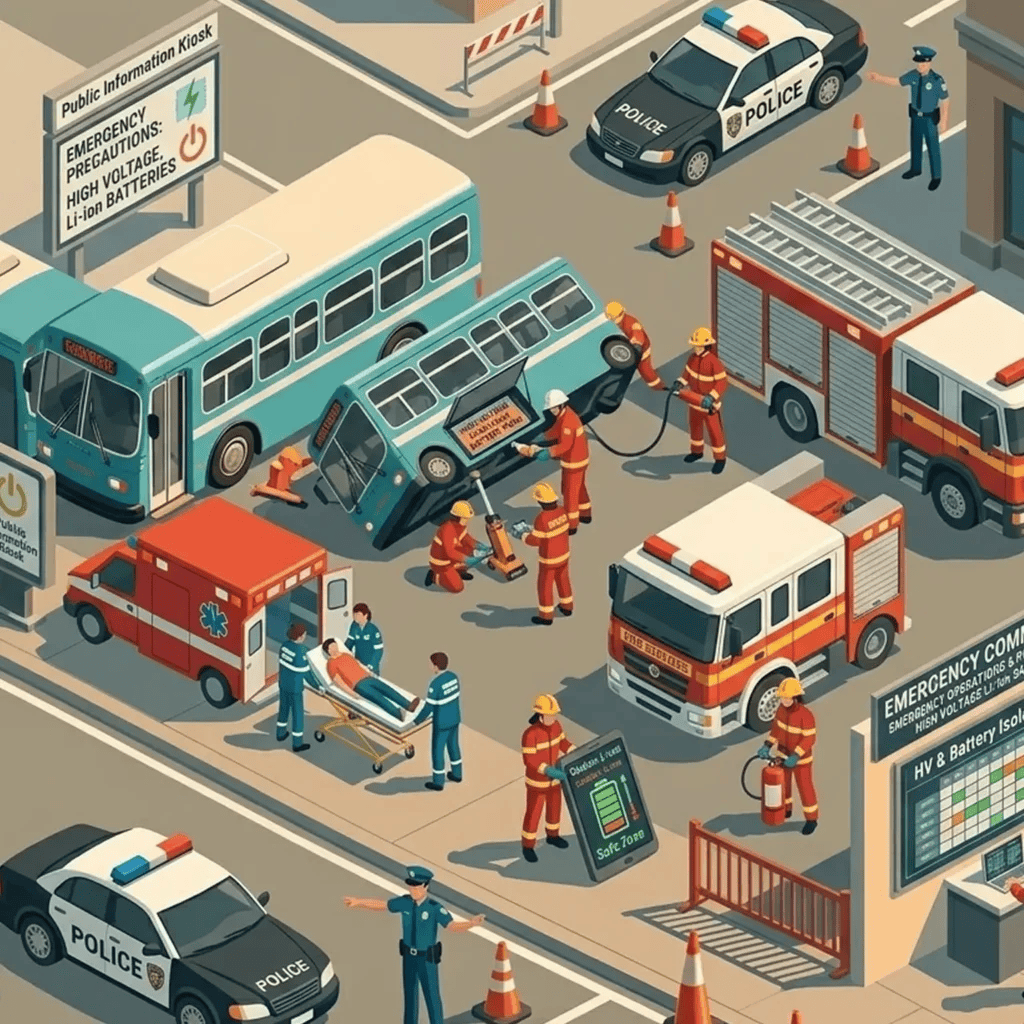
First responders (police, fire services, and ambulance team) handle emergencies with added precautions for high voltage and lithium ion batteries
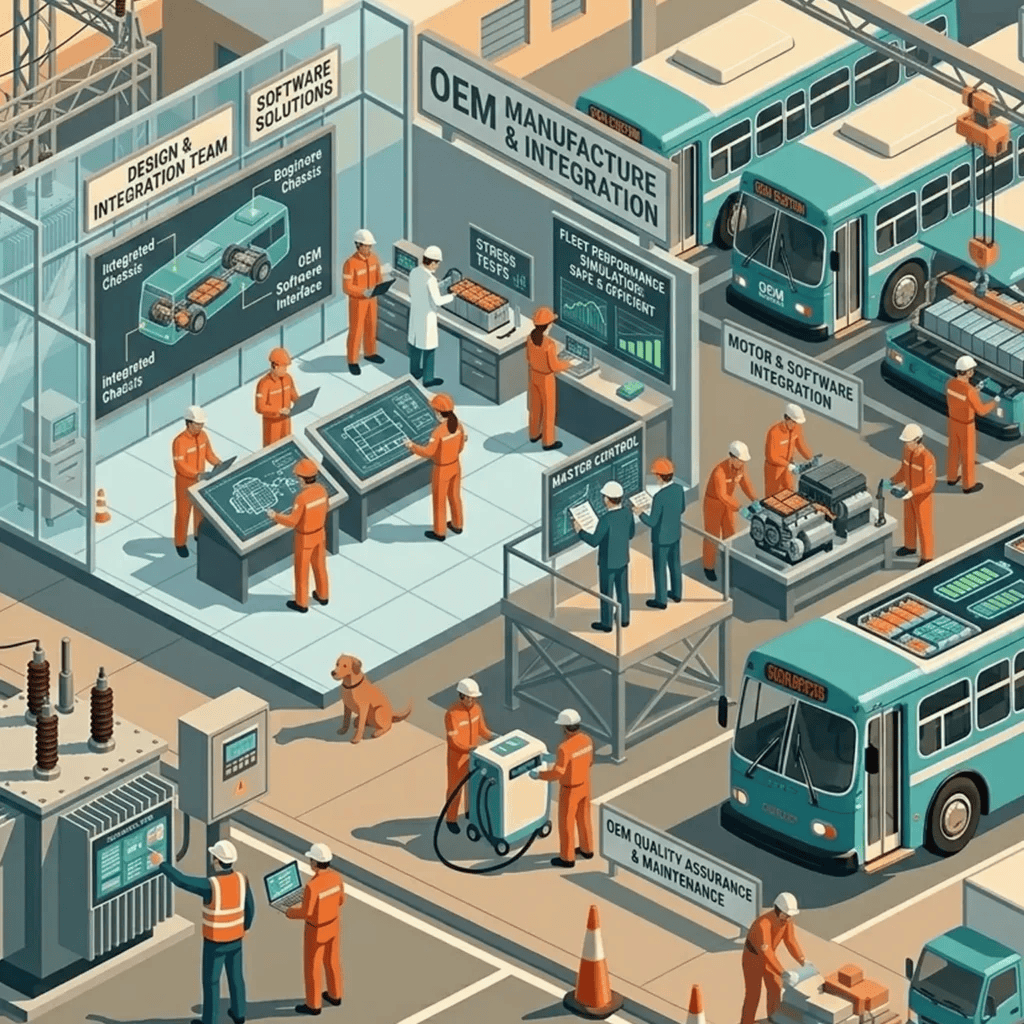
Designs, manufactures, and integrates batteries, motors, and software, providing quality, maintenance, and customized solutions for safe and efficient e-buses