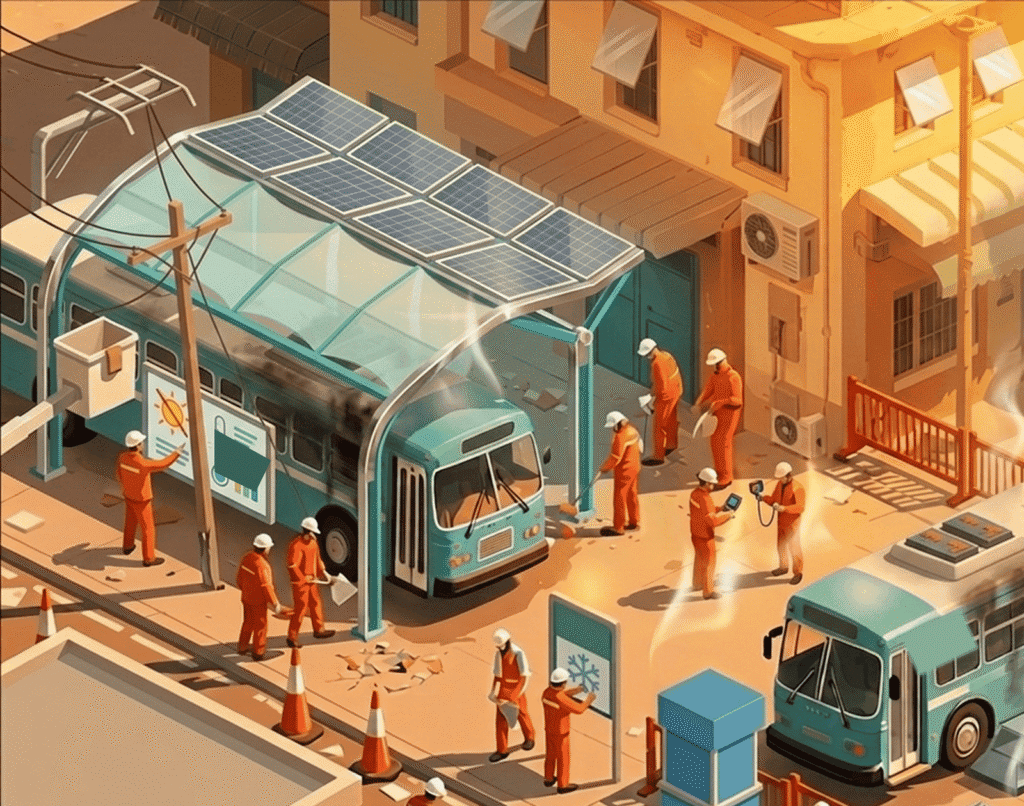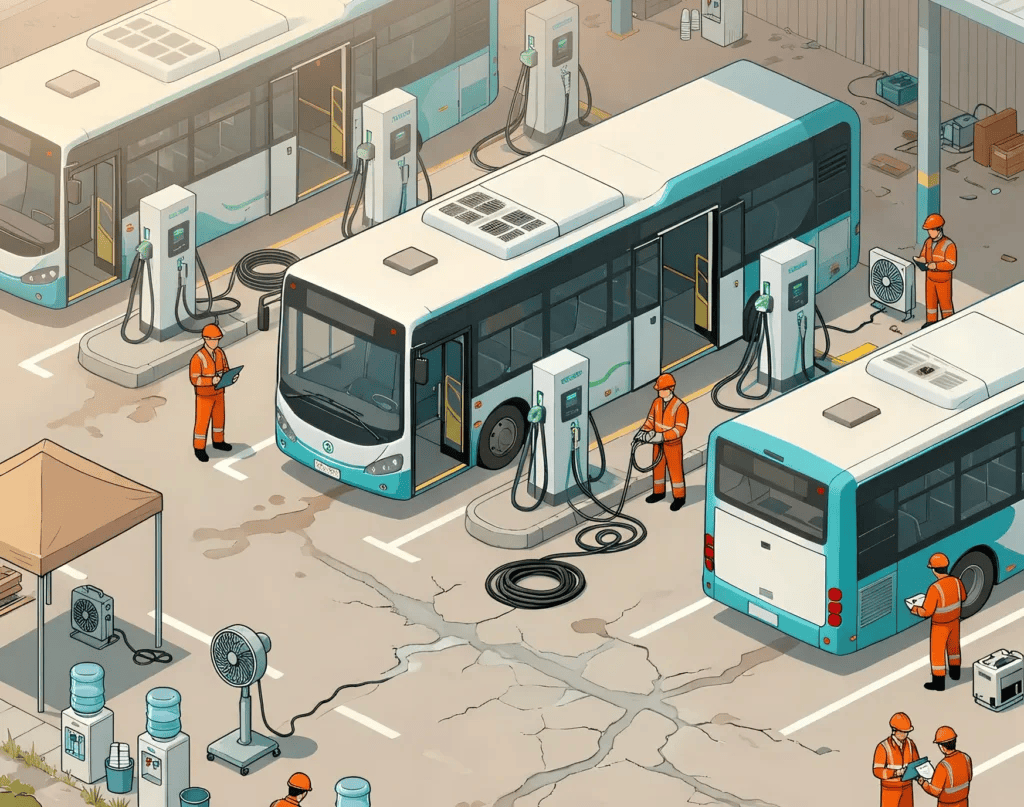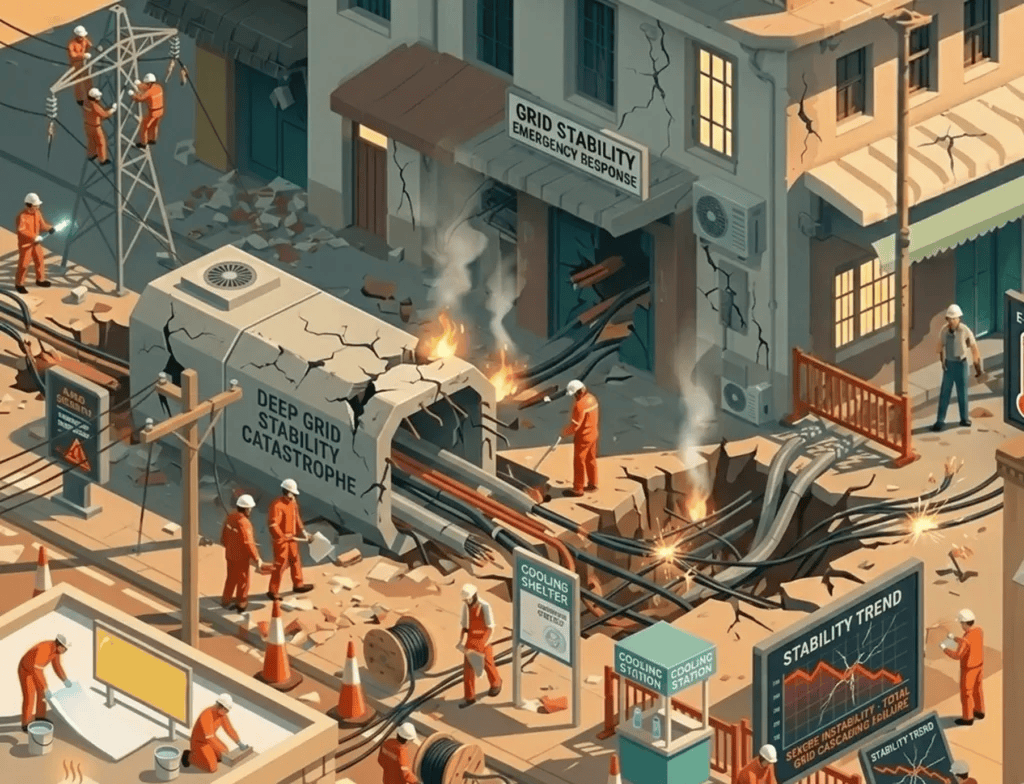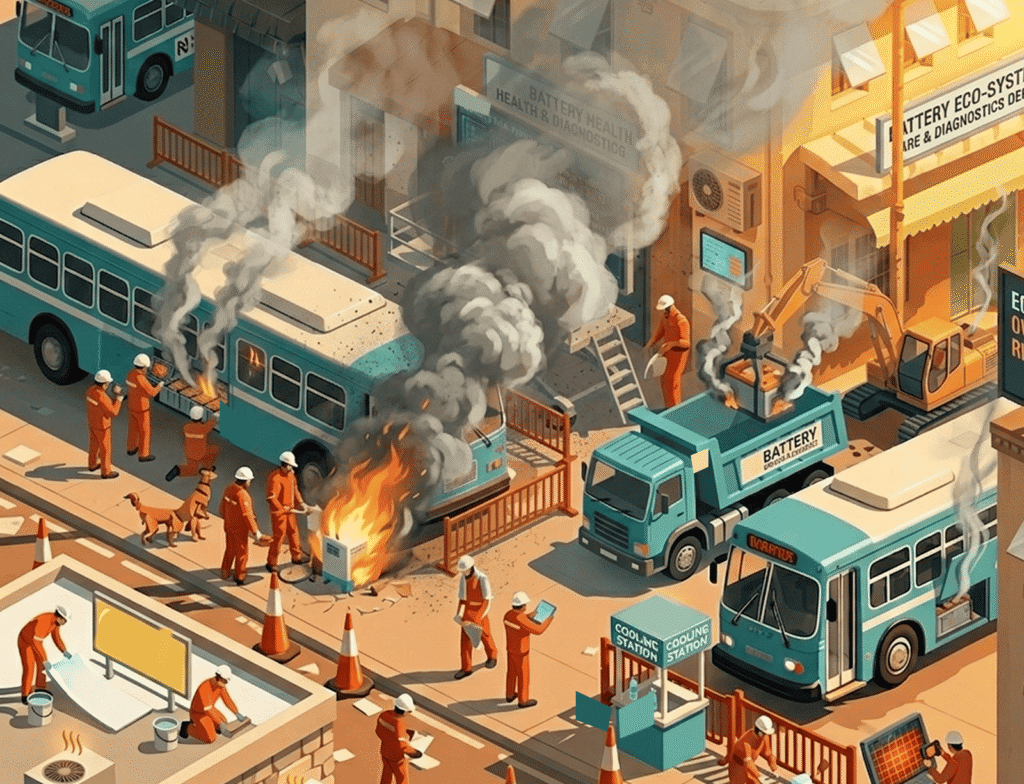



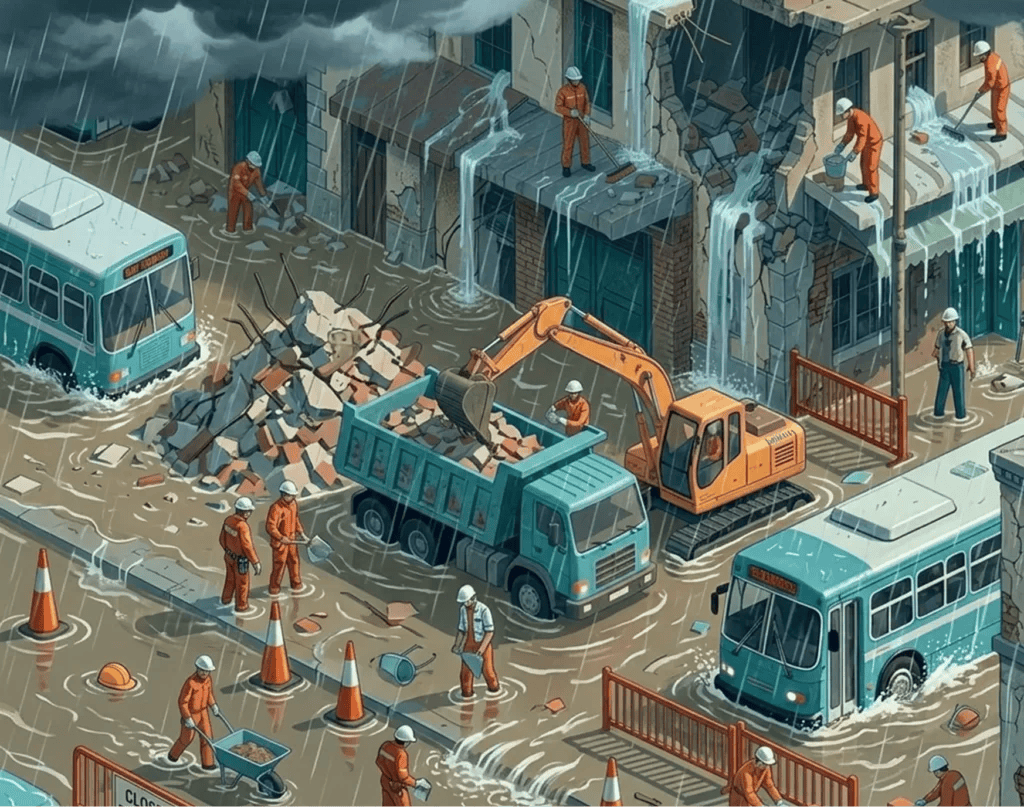
Flood, cyclones, heavy rains and thunderstorm pose multiple and interconnected risks to the e-bus ecosystem affecting fleet, depots, charging infrastructure, and the operating environment simultaneously. Key risks include water ingress into batteries, traction motors and electronic system leading to vehicle damage and safety hazards. Substation and chargers are vulnerable to flooding and power outages, disrupting charging operations. Depots face risks such as inundation of parking bays, workshop and control room, along with access blockages during extreme weather events. Strong wind can cause structural damage, while flooded or unsafe roads result in service disruption and delays.
Explore the expandable sections to see detailed preventive, responsive and recovery measures for the Flood/ Cyclone/ Heavy Rains/ Thunderstorm hazard and for each component (Fleet, Depot, Charging Infrastructure & Operating Environment).
Fire risk due to Short circuit
Potential HV system failure
Automatic HV isolation during water detection
Water Ingress in battery
Design specifications- Bus floor height and Battery Location
IP Rated compliant batteries & Moisture detection sensors
Corrosion of connectors- Moisture-related short circuits
Use of sealed, corrosion-resistant components., Moisture detection sensors
Periodic insulation testing
Vehicle Stalling
Monitoring weather forecast
Route planning in flood risk zones and real time monitoring through ITMS
Passenger Safety risk
Safe evacuation plan
Response Protocols for Drivers operating buses during monsoon or on flooded routes.
SOPs on Safe Evacuation of Buses
Response Protocols for Route Adjustment- Identifying alternate routes, safe zones on route etc
PT- Procurement team
PT- Planning team
IMD
PT- Driver, Depot Safety Team
Structural and Civil Damage
Avoid Low-lying area; Construct Micro detention Centers; Communications with IMD; Upgrading storm water drainage, installation of rainwater harvesting pit; Usage of Porus pavements
Water Ingress in battery causing thermal runaway
Provide Compartmentalisation; Installation of fire–fighting equipments; Adequate Ventilation
Water Ingress in the electrical component
Dedicated Earth Pits; Segregation of HV/LV Panels; Ensure compliance with IP Standards
Earth Leakage Relay Monitoring systems; Elevate the important equipments at height
Electrocution (Personnel Safety Risks)
Usage of PPE Kits & SCBA security
Emergency Isolation protocols
Mock Drills
Response Protocols for Shut Down Depot Operations during flooding/ cyclone-
SOPs to Move Vehicles to Safer location
SOPs to Protect Equipment & Batteries
Response Protocols due to communication system failure
Response Protocols for personnel safety incase of electrocution risk
PT- Planning and Procurement Team
PT- Depot Manager and Safety Officer
Smart city – IMD Early Warning System
Fire risk due to Short circuit
Potential HV system failure
Elevated above historic flood levels; Compliance to IP Standards; Flame Retardant Cables & proper insulation
Water Ingress in charging Infrastructure leads to charging malfunction
Design specifications- elevated platform & IP Protection rating; Site grading & wire trenches to divert surface runoff away from charging
Corrosion of connectors- Moisture-related short circuits
Use of sealed, corrosion-resistant components, Moisture detection sensors
Periodic insulation testing
Disrupt Power Supply
Maintaining dual or distributed power feeds from DISCOMs.
Integration with renewable sources for backup
Charging personnel Safety risk
– Usage of PPE Kits & SCBA equipment
– Emergency Shutdown Protocols
Response Protocols for protection of charging infrastructure during floods, Switch Off Charging Units, Notify DISCOMs (Power Utilities)
Response Protocols incase of water ingress in live charging infrastructure /cable /power distribution panels /EVSE
Response Protocols for thermal event caused by water infiltrating the EVSE
SOPs for safe evacuation of important EVSE
Response Protocols when power outage takes place
Response Protocols for personnel safety incase of electrocution risk
PT- Planning and Procurement Team
PT- Depot Safety Team, Driver
IMD
Fire risk due to Short circuit
Avoid routes with water level exceeding 100mm
Designated safe Zones along routes
Directory of nearby fire stations
Water Ingress in battery
Design specifications- Bus floor height and Battery Location
IP Rated compliant batteries & Moisture detection sensors
Operational Disruption
GIS-based mapping of flood prone area
Alternative paths pre-identified to minimize service disruptions.
Utilize real-time weather alerts, ITMS, IoT-based flood sensors, communication with the driver and GIS mapping to monitor vulnerable zones.
Passenger Safety Risk
Usage of PPE Kits & SCBA security
Emergency Isolation protocols
Safe Evacuation Plan
Response Protocols for Drivers – Operating buses during monsoon or on flooded routes and evacuation passengers in water
Response Protocols for fleet protection during flood – Suspend operations on affected routes; Avoid driving through waterlogged streets
Response Protocols for buses in operations for thermal events, short circuits, due to water triggered electrical faults within traction battery system; onboard fire safety systems compromised
Response Protocols on communication or navigation system failure
PT- Planning and Procurement Team
PT- Depot Safety Team, Driver
IMD