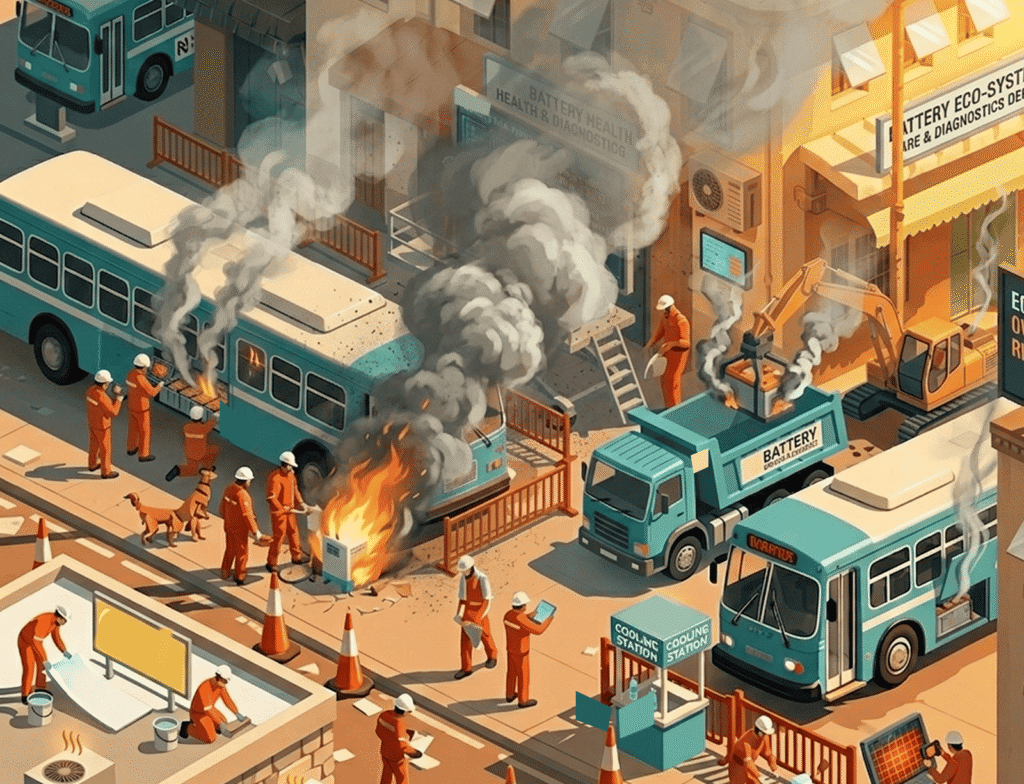
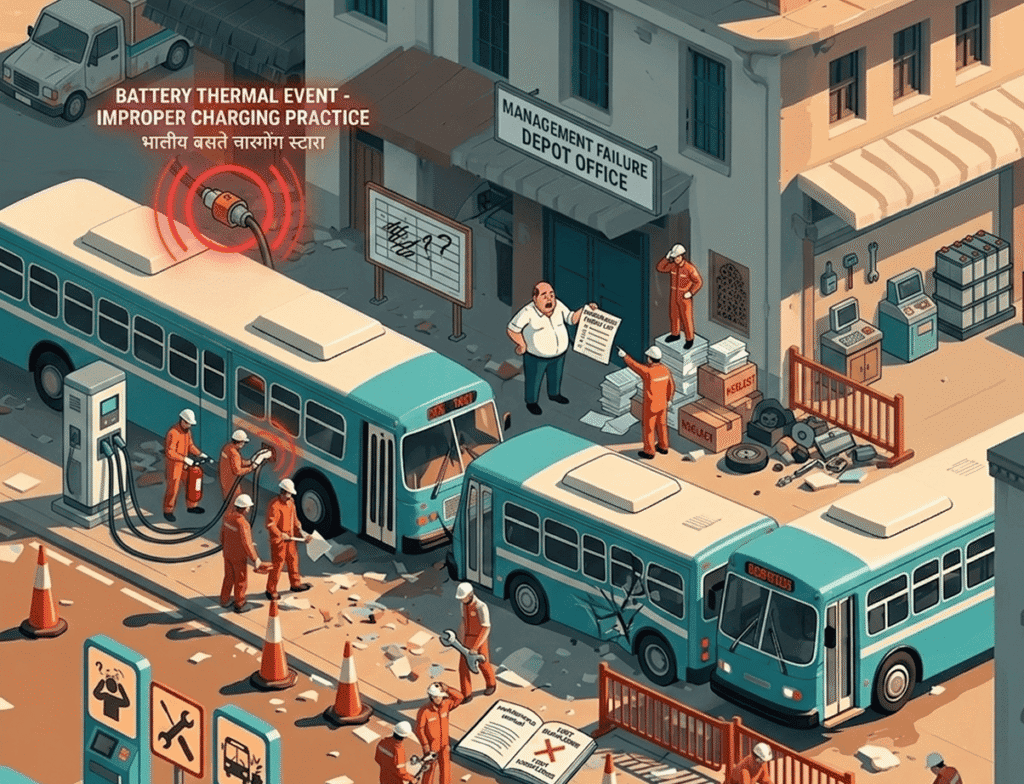
Heatwaves pose significant and escalating risks across all the component of E-bus Ecosystem. Elevated temperature increases the likelihood of battery overheating, thermal runaway, reduced charging efficiency, electronic system failures, higher HVAC loads and heighten safety risks for passengers and staff. Prolonged heat exposure also contributes to driver fatigue, health stress and operational inefficiencies.
Explore the expandable sections to see detailed preventive, responsive and recovery measures for the Heatwave hazard and for each component (Fleet, Depot, Charging Infrastructure & Operating Environment).

Battery Overheating
Use heat-resilient batteries.
Real-time battery thermal monitoring. Upgrade/verify Battery Management System (BMS) & Add auxiliary cooling or fans
Reduced Range
Adjust duty cycles to cooler hours. Monitor real-time SoC (State of Charge) data & Reconfigure routes for shorter round trips
Interior Cabin Overheat
Service HVAC systems pre-summer. Use cabin insulation films or blind and Install roof insulation sheets or reflective paints
Fire or Smoke Risk
Install thermal sensors & fire alarms & Equip buses with Class D extinguishers.
Train drivers on early signs of fire or smoke
Component Wear & Tear
Conduct summer-ready fleet health checks & Replace vulnerable parts in advance.
Store buses in shaded or ventilated depots
Response plan for bus operations during heatwaves-
Response plan for handling overheated buses
PT- Planning Team/ Control Room
Operator / Service Contractor
PT- Depot Manager, Driver
Fire Department
Thermal Damage to Idle Buses
Shade structures for parking bays. Use heat-reflective paint or materials. Reposition the buses within the depot to avoid prolonged heat exposure
Green facade, cool roofs, plantation and transplantation within depots premises
Fire Risk from Charging Areas
Isolate charging zones with heat insulation. Implement remote thermal monitoring systems for bus-charger interactions
Heat Stress on Staff
Provide shaded rest zones, hydration stations, and breaks- Install industrial fans or evaporative coolers in work sheds
SOPs for Depot operations during heatwaves/ extreme temperatures
PT- Procurement Team
PT- Depot Manager, Driver
Fire Department
Charger Overheating
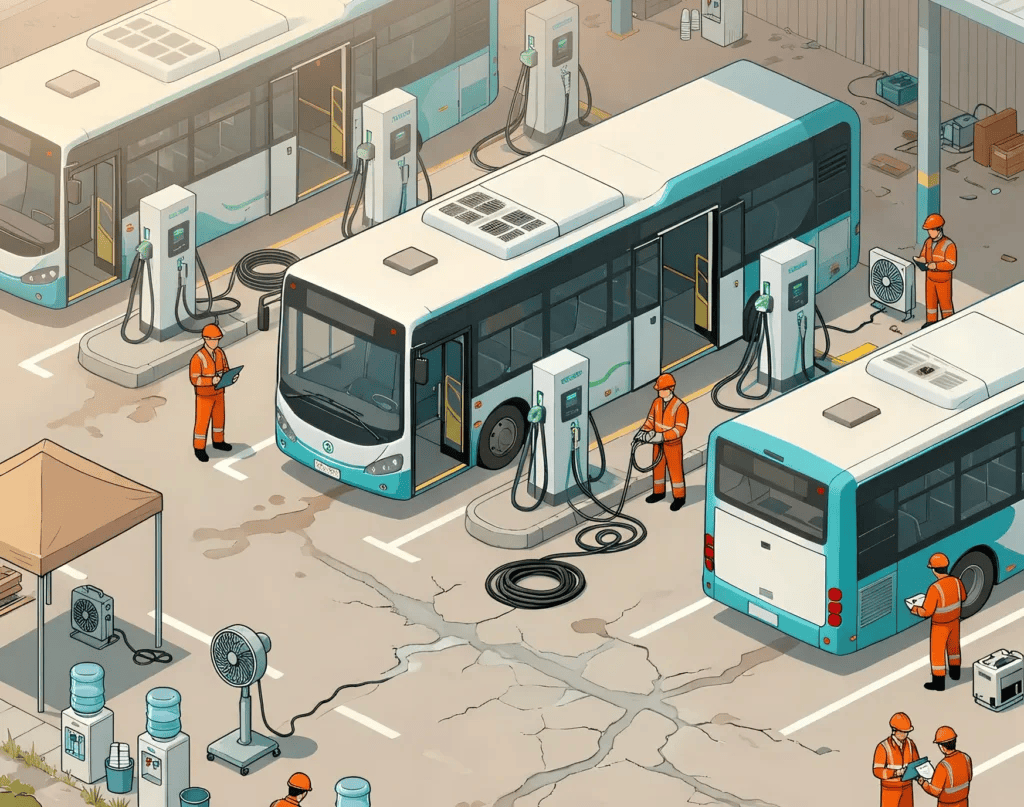
Install roof canopies/shade covers. Use heat-resistant housing/enclosures. Integrate active/passive ventilation systems
Reduced Charging Efficiency
Schedule charging at night/early morning. Use temperature-tolerant charger models
Thermal Damage to Components
Regular summer maintenance of switchgear and cables. Thermal insulation of charging cabinets
Fire/Short Circuit Risk
Use flame-retardant cables/connectors. Conduct regular cable stress tests. Ensure availability of fire suppression systems at charging points
Exacerbating grid load during peak period may result in power outage
Coordinate charging schedules with DISCOMs. Install energy storage or backup supply systems
Response plan for charging infrastructure operations during heatwaves
PT- Procurement team, Planning Department
DISCOM
OEMs, Charging Operators, Depot Manager
Fire Department
Driver Heat stress- Fatigue & Health Issues
– Limit shift durations & Enforce mandatory rest breaks
– Automate AC control and insulated cabin curtains
– Use ergonomic seating and insulated driver cabins
Urban Heat Island (UHI) Effect
– Optimize routes to avoid UHI hotspots during peak heat
– Add green buffers along corridors where feasible
Passenger Discomfort at Stops
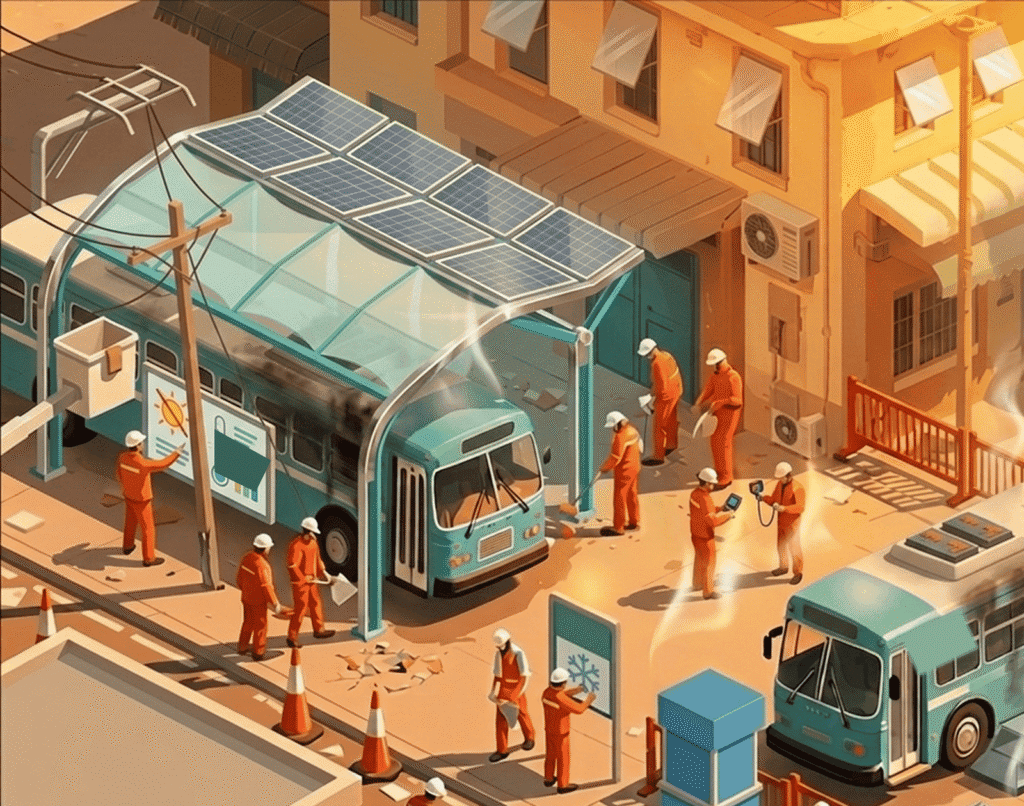
– Install shaded, ventilated bus shelters
– Use heat-resistant materials
– Display temperature warnings at digital boards
Emergency action plan for route planning during heatwaves
SOPs for Drivers
PT- Planning and Procurement Team
PT- Operations Manager, Depot Manager and Driver
Fire Department