Wondering What Each Section of the E-Bus Ecosystem Covers?
This section is designed to help the reader to easily navigate the website and find the most relevant information for their roles. Each menu option highlights a specific part of the guide, allowing the reader to explore the specific sections.
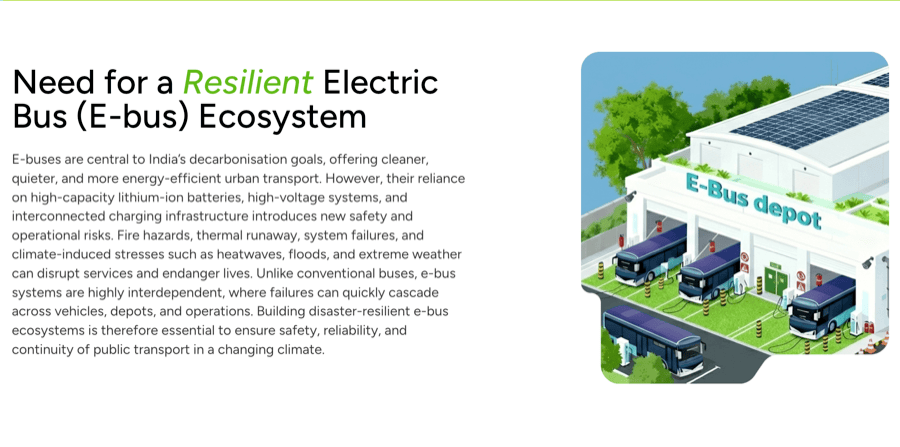
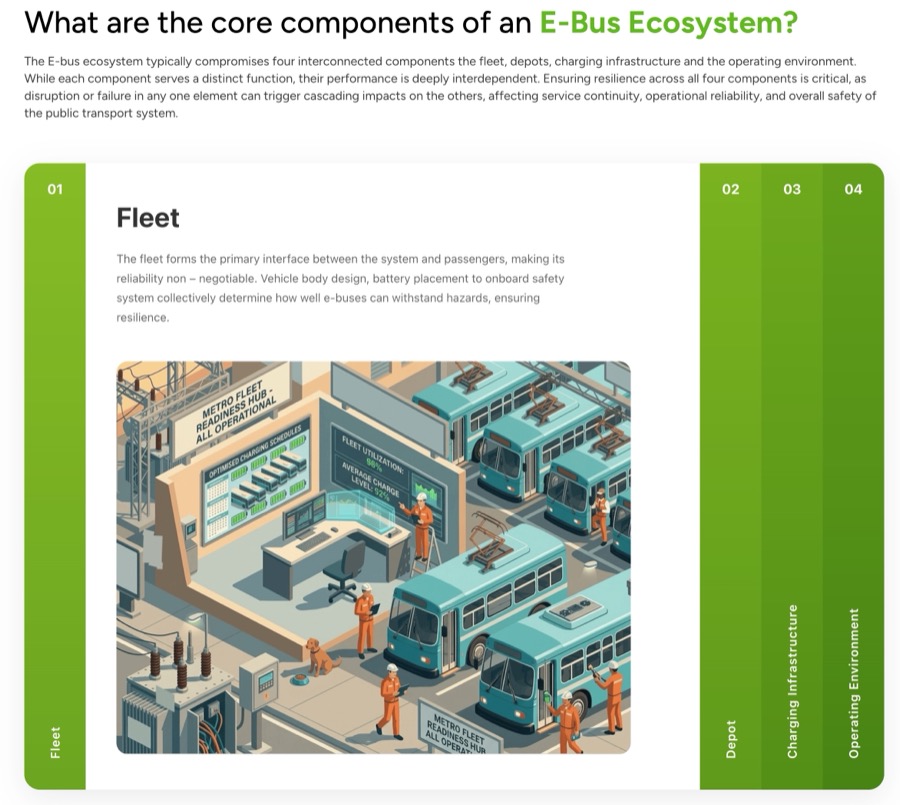
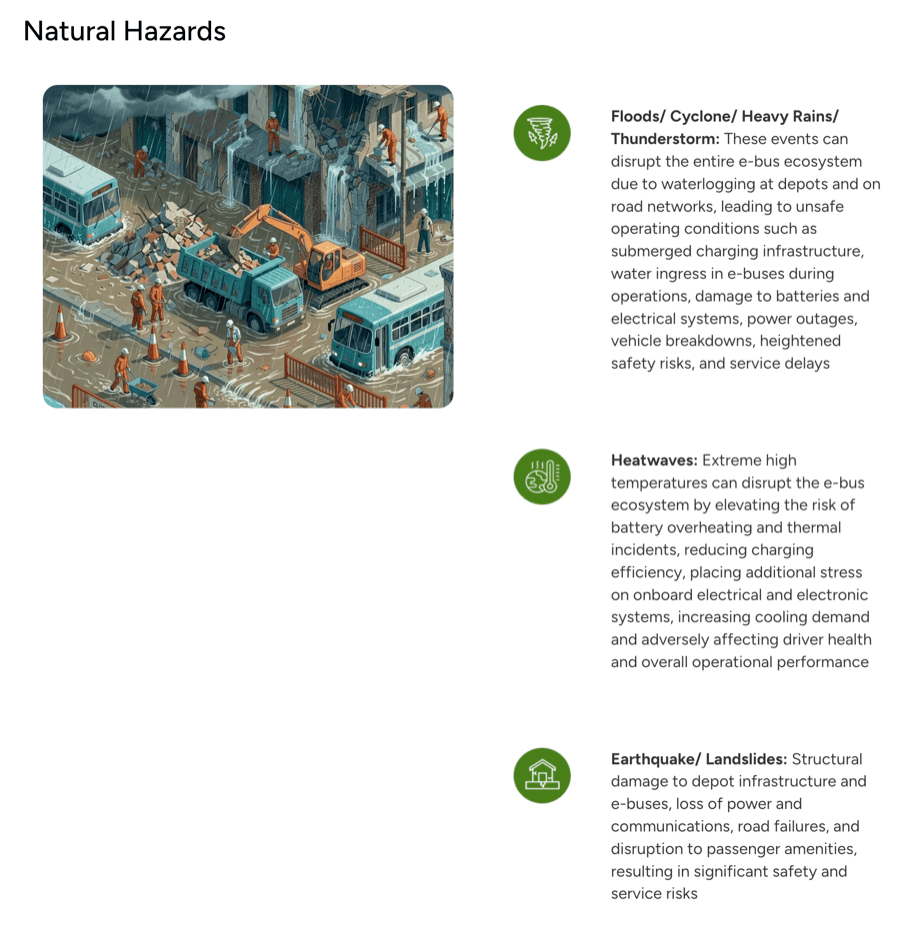
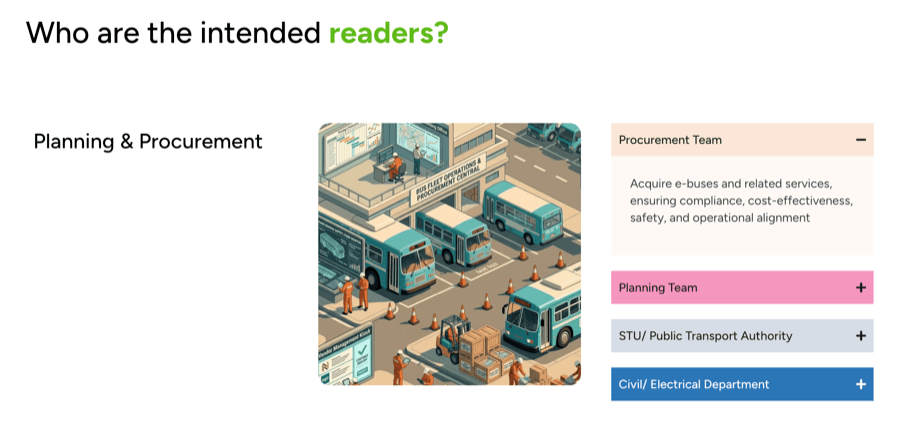
To begin, the Home Page introduces the need for resilience within the e-bus ecosystem, outlining its four key components, the hazard landscape and the stakeholders that this guide is designed for. It also lays the foundation for the subsequent sections on the E-Bus Hazard Resilience Framework, presenting strategies across the pre-disaster, during-disaster, and post-disaster phases along with the enablers section that highlights the human, institutional and financial capabilities required to build a resilient e-bus ecosystem. Readers are therefore encouraged to start with the Home Page to build a clear understanding of the toolkit’s overall approach.
While reviewing the guide in its entirety it is recommended to develop a comprehensive understanding of the e-bus ecosystem and its hazard preparedness, readers can also navigate directly to sections that align most closely with their specific roles and responsibilities. Use the carousel below to explore different sections of the guide and dive deeper into the topics most relevant to you.
This section is designed to help the reader to easily navigate the website and find the most relevant information for their roles. Each menu option highlights a specific part of the guide, allowing the reader to explore the specific sections.
To begin, the Home Page introduces the need for resilience within the e-bus ecosystem, outlining its four key components, the hazard landscape and the stakeholders that this guide is designed for. It also lays the foundation for the subsequent sections on the E-Bus Hazard Resilience Framework, presenting strategies across the pre-disaster, during-disaster, and post-disaster phases along with the enablers section that highlights the human, institutional and financial capabilities required to build a resilient e-bus ecosystem. Readers are therefore encouraged to start with the Home Page to build a clear understanding of the toolkit's overall approach.
While reviewing the guide in its entirety it is recommended to develop a comprehensive understanding of the e-bus ecosystem and its hazard preparedness, readers can also navigate directly to sections that align most closely with their specific roles and responsibilities. Use the carousel below to explore different sections of the guide and dive deeper into the topics most relevant to you.
Home
Risk Assessment Framework
Hazard Specific Strategies
Blueprint for Disaster Preparedness
Enablers
Resources
On Clicking the Home Button
To begin, the Home Page introduces the need for resilience within the e-bus ecosystem. It explains what resilience means in this context, outlines its four key components, and presents the hazard landscape that electric bus systems may face. It also identifies the diverse stakeholders this Guide for Building a Resilient E-Bus Ecosystem is intended for. It lays the foundation for the E-Bus Hazard Resilience Framework, describing strategies across the pre-disaster, during-disaster, and post-disaster phases.
Additionally, through the "What risks and hazards impact the E-Bus Ecosystem?" sub-sections on the Home Page, readers can directly navigate to the Hazard-Specific Strategies webpage. That section provides a deeper look at the key hazards affecting the e-bus ecosystem and outlines strategies to manage risks across fleet, depots, charging infrastructure, and operations.
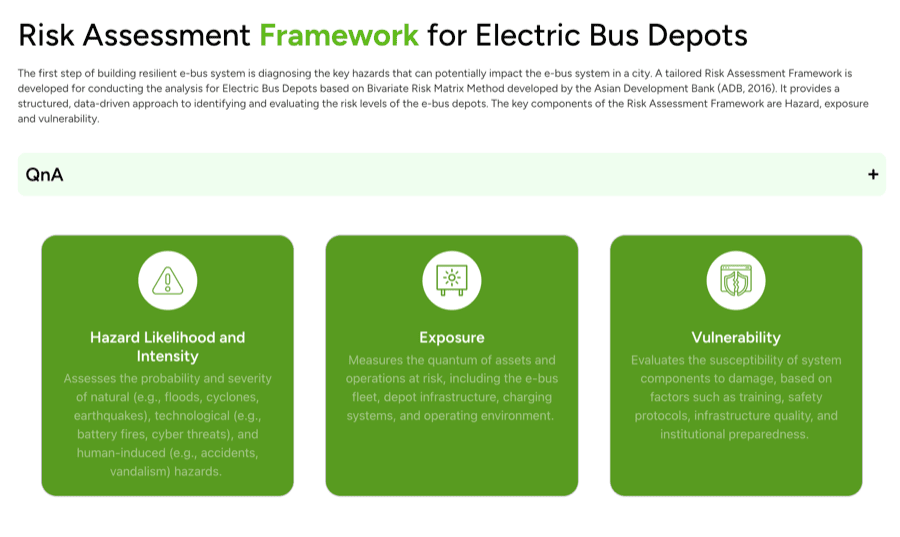
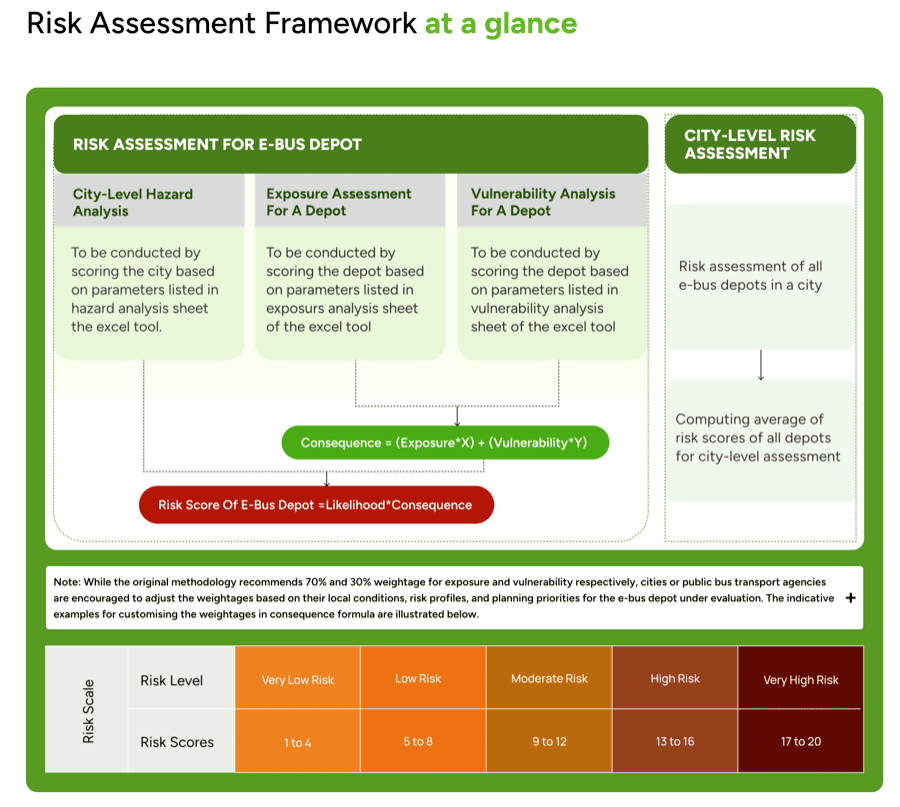
The Risk Assessment Framework section explains how risks to electric bus depots are systematically identified, assessed, and prioritised. Given the wide range of hazards that can affect the e-bus ecosystem, the framework adopts a diagnostic, evidence-based approach to risk assessment. It draws on and adapts the bivariate matrix method developed by the Asian Development Bank (ADB), enabling public bus agencies to evaluate hazard likelihood and intensity alongside the exposure of assets and the vulnerability of the e-bus ecosystem. This structured methodology helps stakeholders systematically prioritise risks and identify areas where resilience-building measures are most needed.
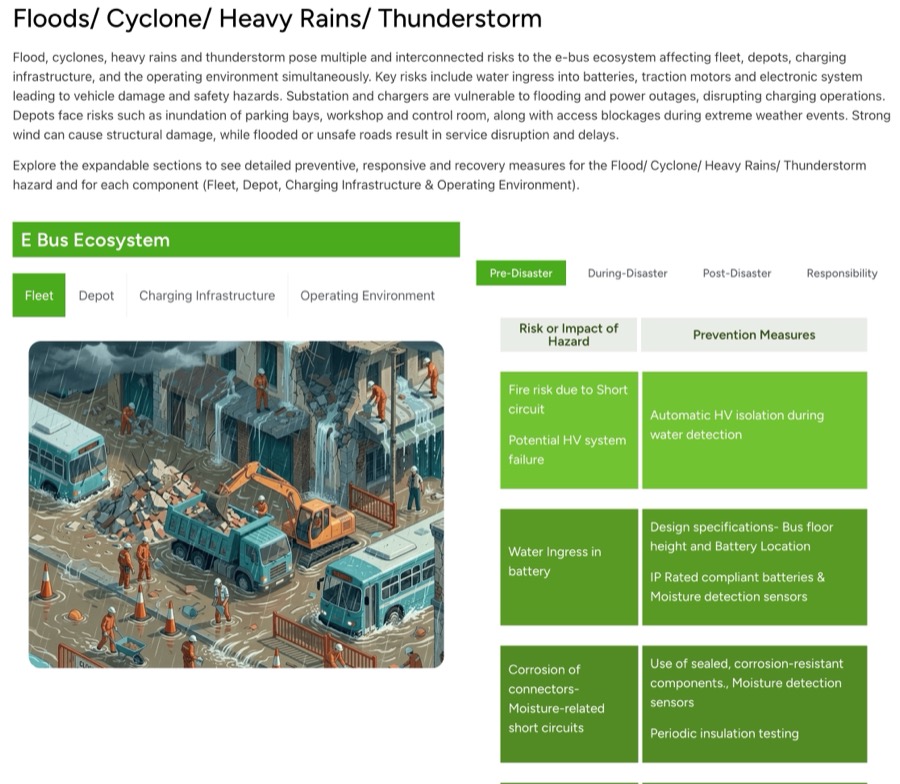
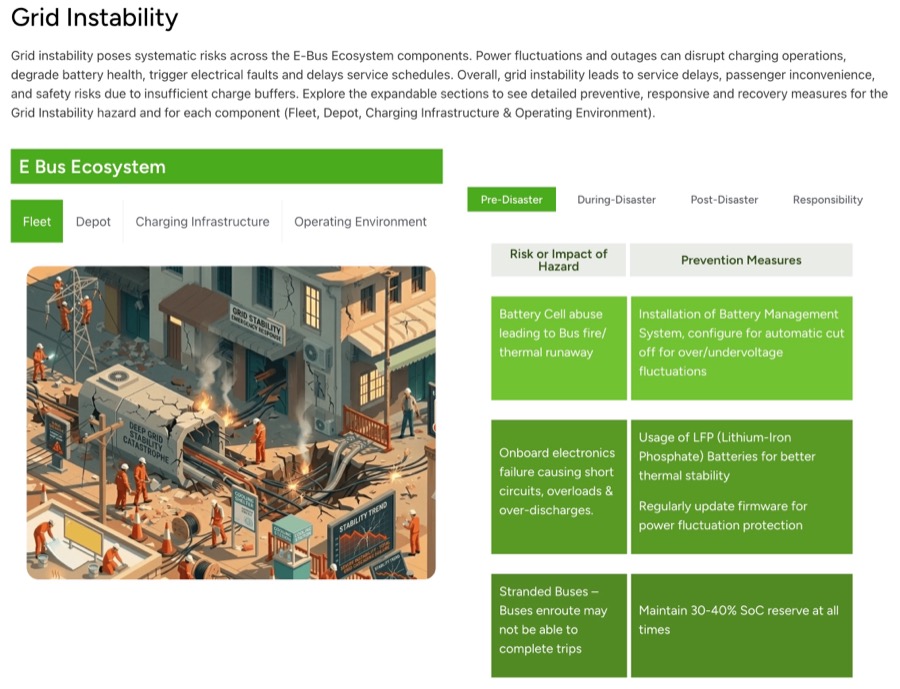
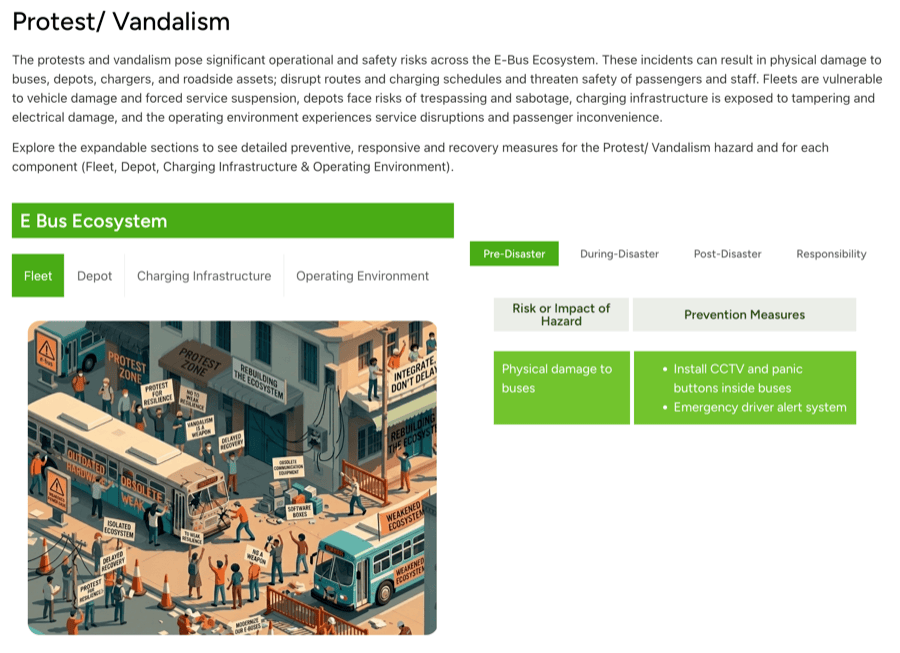
The Hazard Specific Strategies section presents a structured, hazard and component-wise mapping of risks and potential impact across the e-bus ecosystem covering fleet, depots, charging infrastructure, and operating environment. For each identified hazard, the section maps the associated risk against the most vulnerable components and outlines clearly defined pre-disaster, during-disaster, and post-disaster strategies to mitigate these risks. To support effective implementation, responsibility mapping is also integrated, helping assign clear accountabilities to relevant stakeholders at each stage of disaster management.
From this page, readers can also navigate directly to the Blueprint for Disaster Preparedness section. This section provides more detailed guidance on pre-, during-, and post-disaster measures, offering practical recommendations to strengthen operational readiness, safety protocols, and response mechanisms across the e-bus ecosystem.
On Clicking the Blueprint for Disaster Preparedness
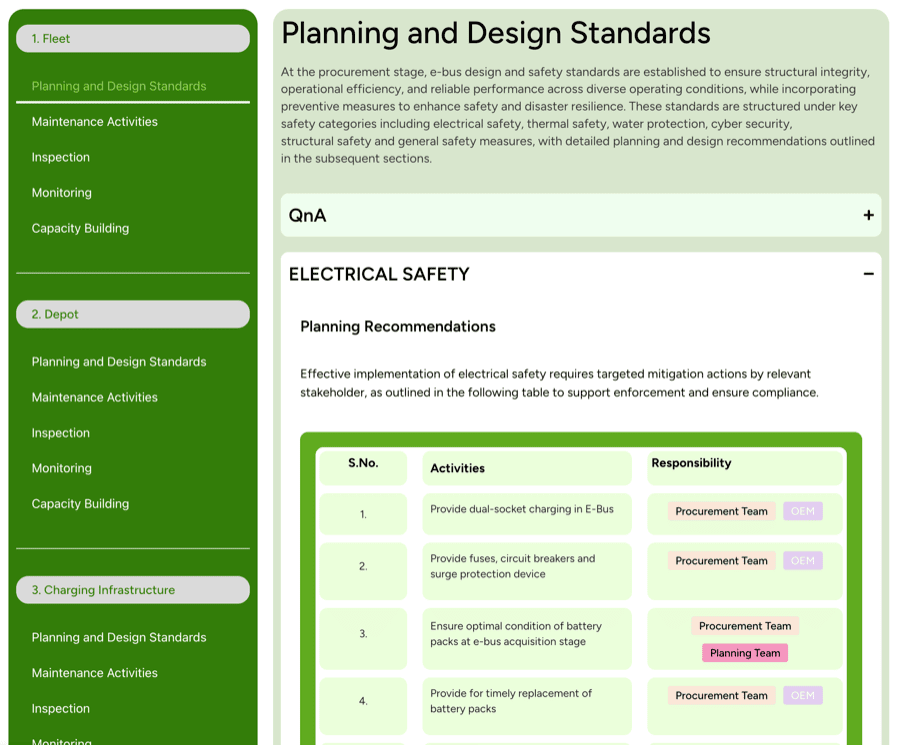
The Blueprint for Disaster Preparedness section serves as a practical toolkit for strengthening resilience across the e-bus ecosystem. It focuses on addressing hazard specific impacts and operational challenges, while outlining strategies tailored to the technical and operational characteristics of e-bus systems. The recommendations are designed to align with global best practices while remaining responsive to local operational conditions and constraints.
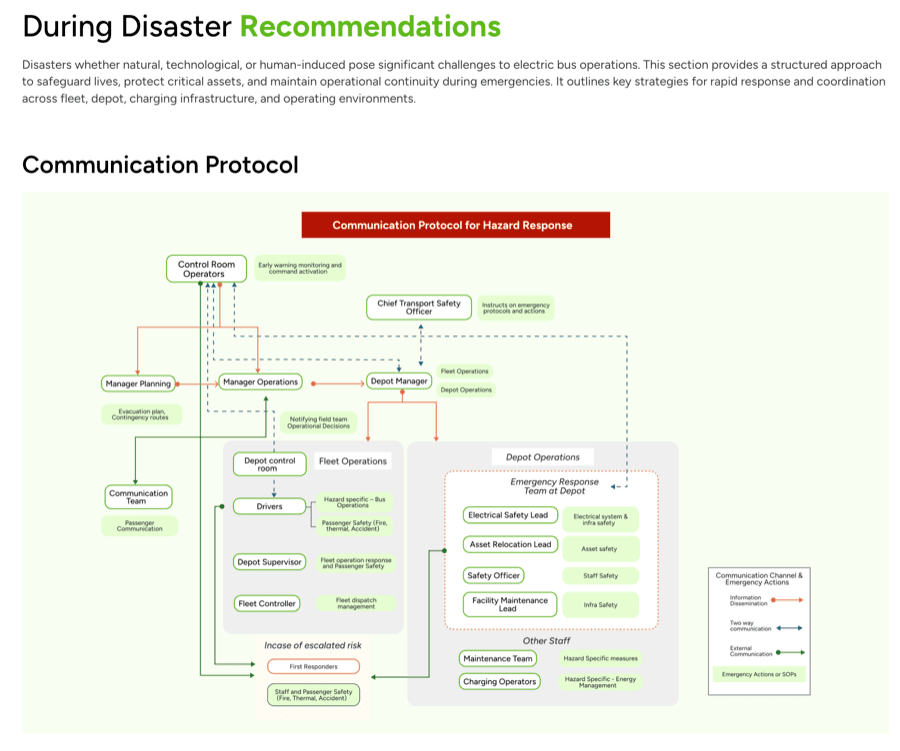
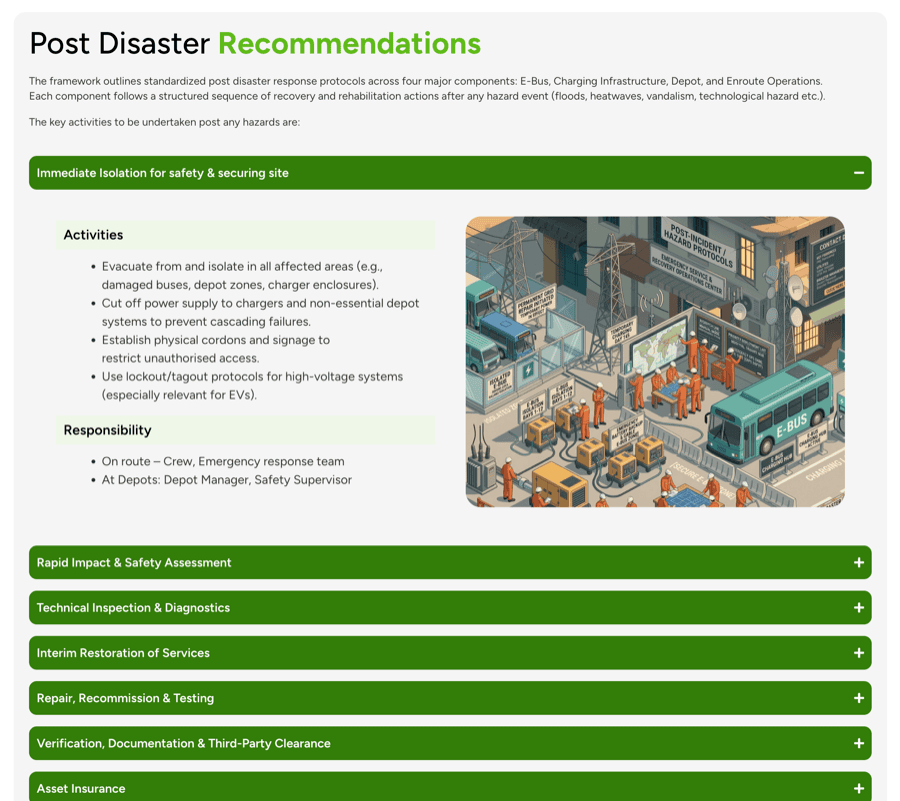
The recommendations are organised across the pre-disaster, during-disaster, and post-disaster phases, providing actionable measures for preparedness, real-time response, and recovery. These include recommendations related to infrastructure protection, operational continuity, emergency communication, safety protocols, and restoration processes. Together, these measures offer a clear and structured pathway for stakeholders to protect critical assets, maintain service continuity, and enable faster recovery following disruptive events, thereby embedding resilience as a core principle within e-bus planning and operations.
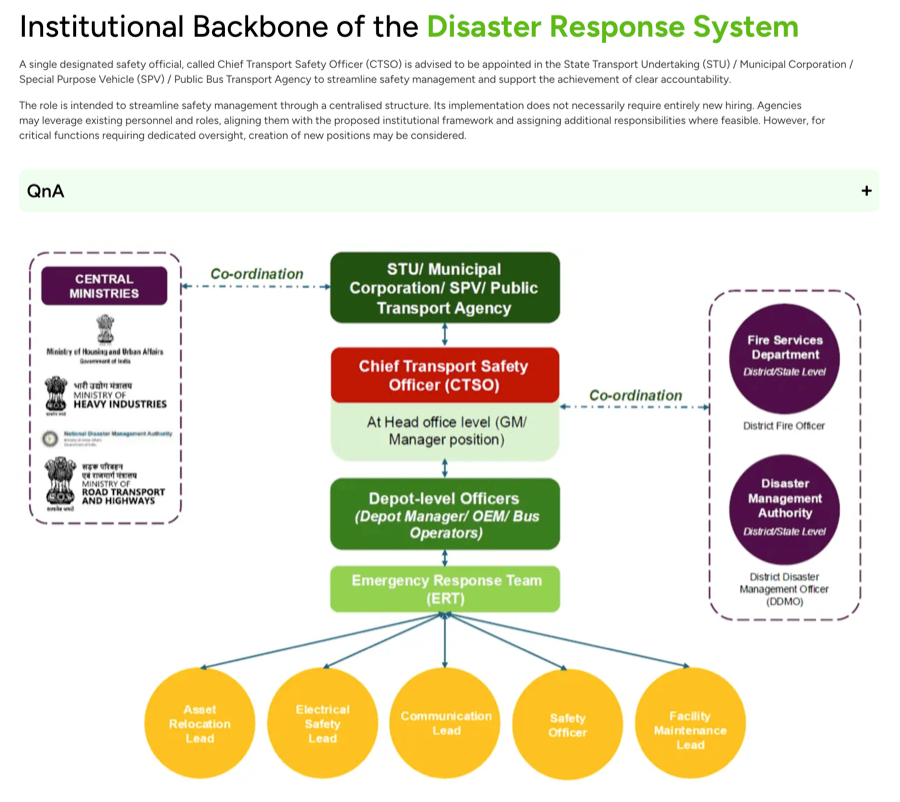
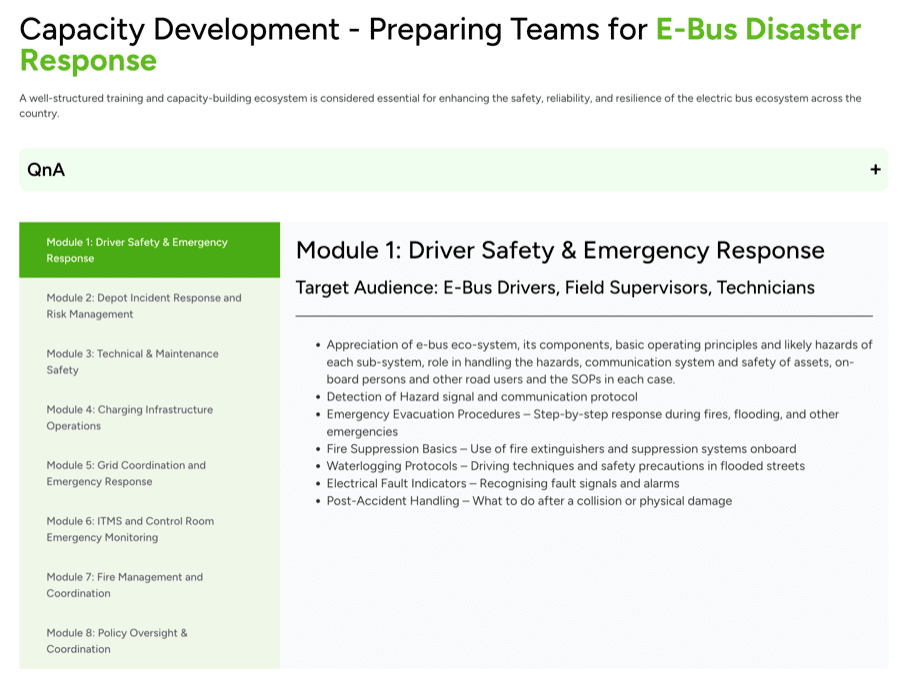
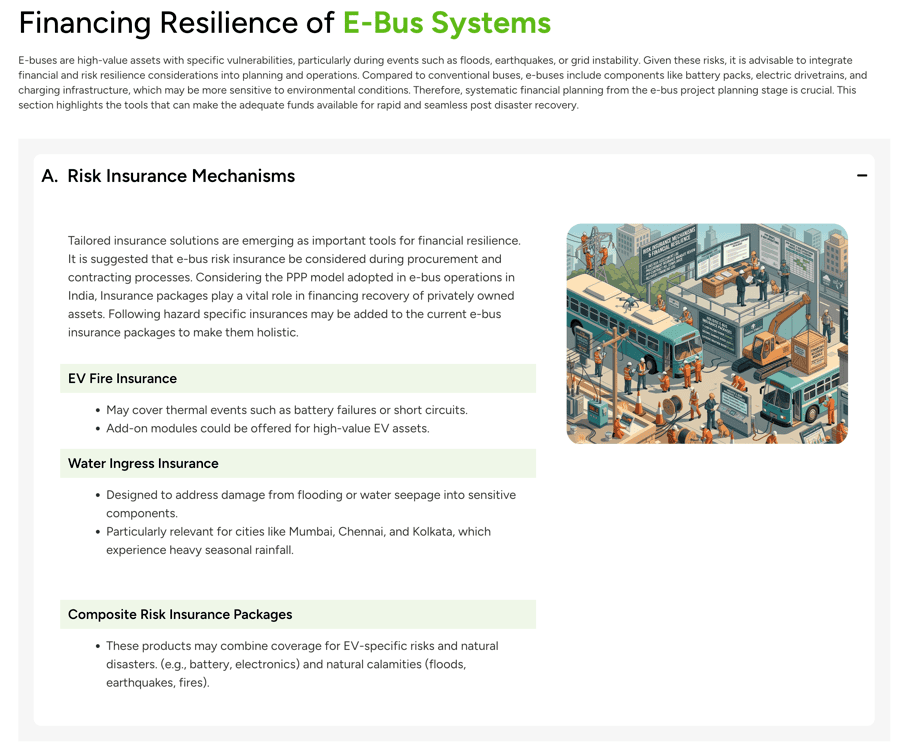
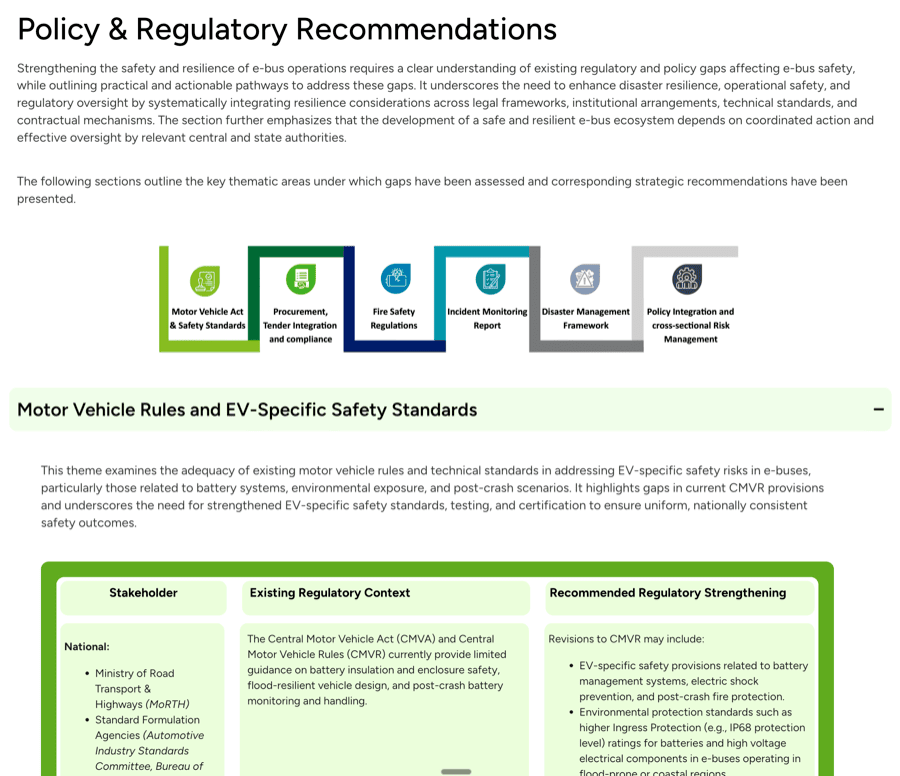
The Enabler section highlights the human, institutional and financial capabilities required to build a resilient e-bus ecosystem. It focuses on strengthening adaptive capacity through targeted training, well-defined institutional roles, and robust coordination among relevant agencies and stakeholders. The section also emphasises the importance of financial resilience, outlining mechanisms such as insurance coverage, contingency funding, and rapid recovery financing to support timely response and restoration services. These measures are complemented by supportive policies and regulatory frameworks that enable effective implementation.
Together, these enablers transform preparedness into operational capability, ensuring that when disruptions occur, the system along with its people, institutions, and financial mechanisms can respond quickly, effectively, and in a coordinated manner.
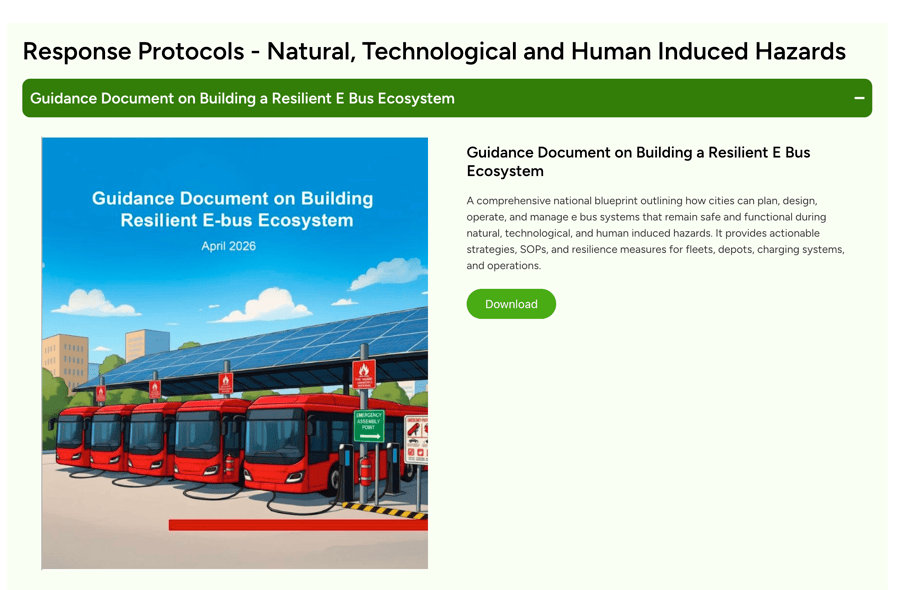
The Resources section brings together all supporting materials for the Guide for Building a Resilient E-Bus Ecosystem in one convenient place. Here, readers can explore and download key documents that complement the guidance provided across the website and support practical implementation. These resources include the National Guidance Document on Building a Resilient E-Bus Ecosystem, the Risk Assessment Framework for E-Bus Depots, Standard Operating Procedures (SOPs) for disaster response, and the Post-Hazard Assessment Checklist for E-Bus Components.